 Cottage at Home
Disclosure: some links below are affiliate links — buy through one and we may earn a small commission, at no extra cost to you.
Cottage Christmas decor: the kept house in December
Cottage Christmas decor for the kept house in December — real greenery cut and draped, brass and candlelight, paper and cloth, and the box with its history.
In this guide
By the second week of December the dark has finished arriving. Night sits on the glass by half past four and is still there at breakfast — the year at its deepest — and the house answers the only way a kept house ever has, with things that were cut green and things that burn. A branch of pine lies along the sill over the sink, giving its scent up into the dish steam. The candles have moved from the drawer to the table. And overhead, in the attic or the back of the hall closet, the box waits for the Saturday it comes down.
The shops answer the month differently — with coverage. Tinsel by the yard, garland by the armful, baubles in this year's colours sold by the dozen, all of it glittering because glitter is what a display does instead of breathing. Cottage Christmas decor runs on the opposite law, and the law fits in three words: greenery over glitter. Bring in what was alive. Light it with flame. Dress the rest in paper and cloth, and let most of what goes up come out of one box that has been doing this longer than anyone now unpacking it. The whole season, taken slowly, is only those four moves.
Greenery over glitter
The case for real greenery is not sentiment; it is what the stuff does. A cut bough arrives carrying its own weather — pine resin, cedar's dry sweetness, the cold it came in with — and no jar candle has ever counterfeited that. Its green is the browned, deepened green the whole heritage palette leans on, nothing like the mint of molded plastic, and it goes on deepening as the weeks pass, drying toward bronze at the tips as though it knew the season had an end. Glitter can only catch light and fling it back. Greenery holds light the way wool holds lamplight — a flame set near a draped bough seems to warm it from inside. And a house that took its autumn slowly arrives at this door already half dressed: the amber autumn closes with the last dried stems giving way to something green and sharp-smelling, and December simply finishes that sentence. Nothing has to come down. The wool stays, the lamp habit stays, and the stoneware jug changes its cargo.
Boughs cut, not bought
Where the greenery comes from matters less than the shops would like, and costs less. Every tree lot ends its day with a trimmings pile — branches sawn off so somebody's tree would fit its stand — and a polite question at the gate sends home half the cottage Christmas decor the month will need, free or for a dollar or two. A yard with any evergreen in it tithes a few boughs without showing the loss; an old garden may own holly; a fence line may be carrying ivy. It helps to know the habits of what gets carried home. Fir hangs on to its needles longest indoors, pine drapes soft over a mantel edge and lasts nearly as well, cedar lies flat and obedient on a sill, and spruce — generous, prickly — sheds first, so it takes the spots nobody brushes past. The placing is short work: the mantel first, laid flat, no wire needed; the deep sills; a doorframe where a nail survives from other years; and a stoneware crock of standing boughs by the door, the winter's answer to the summer jug, topped up with water like any cut stems. Keep all of it clear of the radiators, and when the tips brown toward mid-January, out it goes with the tree, work done.
The box that comes down
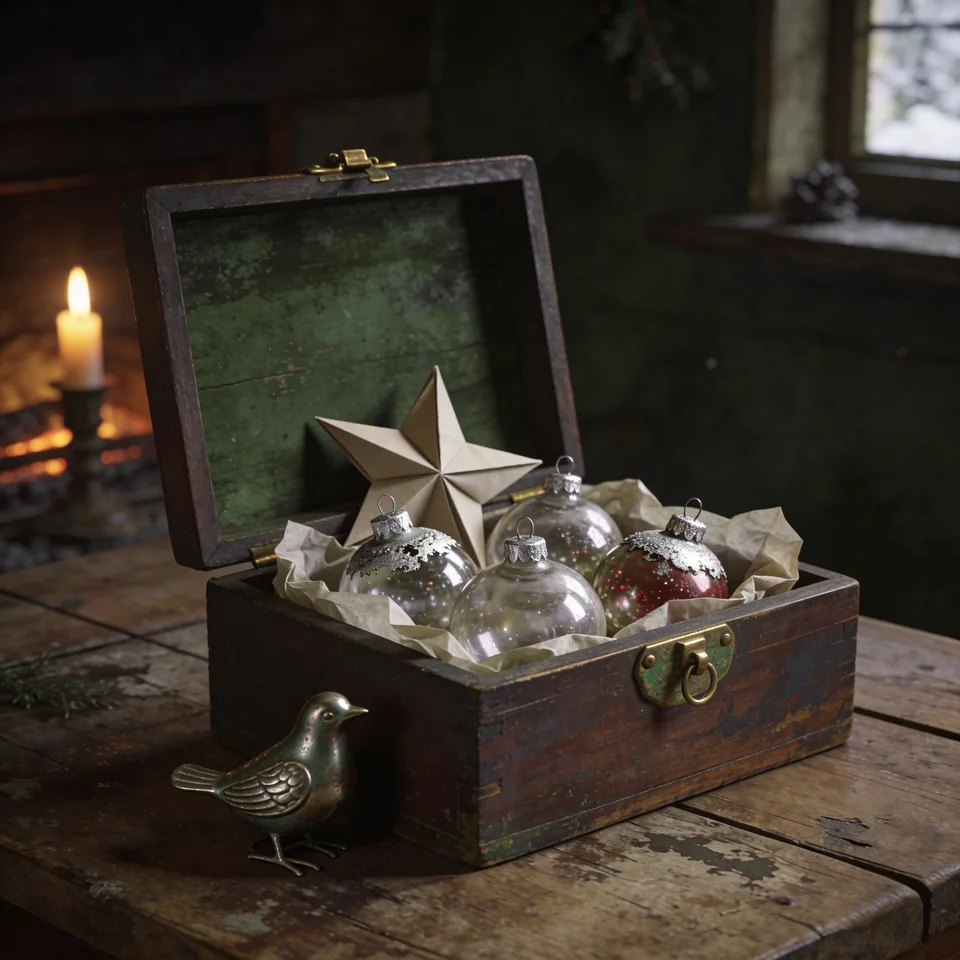
Whatever else the year changed, the box is the constant. Inside, in tissue gone soft as cloth from fifty foldings, is the house's whole Christmas memory: glass baubles thin as a held breath, their silvering worn away at the shoulders; a paper star with a name pencilled on the back by a hand that has since signed leases; the tin bird whose tail wire has been bent as long as anyone can testify. None of it matches, and all of it belongs — the same law that runs a grandmother's kitchen, where nothing was chosen to go together and everything does, because memory is doing the arranging. This is the difference between a kept tree and a themed one. The themed tree — one palette, bought entire, restyled when fashion turns — is a lobby tree; it decorates a season and is forgotten. The kept tree adds an ornament or two a year, loses almost none, and takes a whole evening to dress, because dressing it is remembering. A thin box — a first house, a fresh start — only means the history is early, not absent; one or two real additions a year, and within a decade the unpacking takes its proper hour.
A tree kept plain
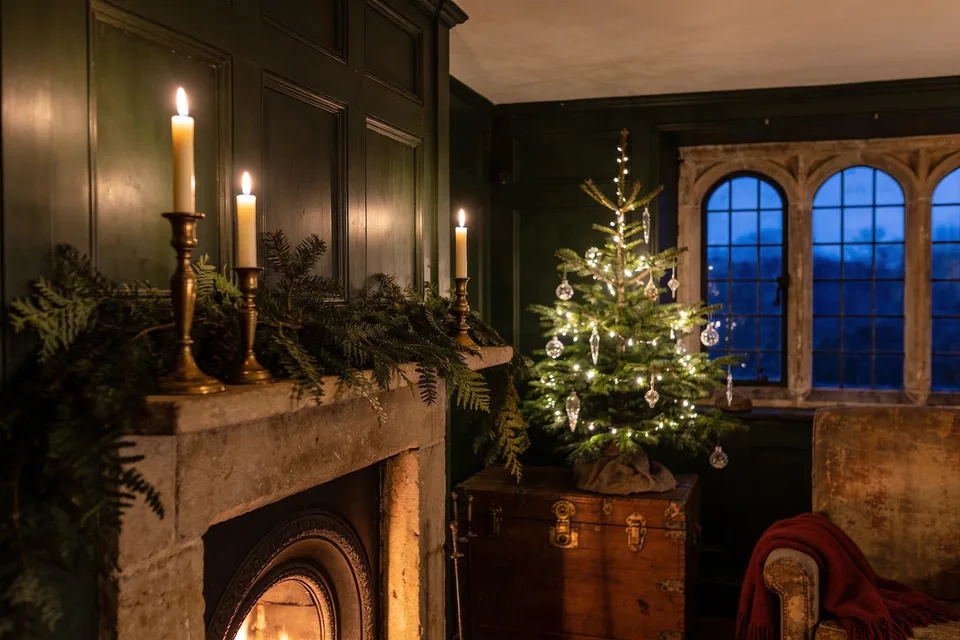
The tree underneath all of that asks one honest question — cut, or kept? — and both answers are respectable. A cut tree drinks and sheds and scents the room, then leaves with the year. An artificial one defended for decades, wired branch by branch each December, becomes an inheritance in its own right. What the kept house declines is the third option: the tree as an annual purchase of a look. Size carries no argument: trees stood on parlour tables long before they stood on floors, and a small tree on a chest, dressed from the box, outranks a tall one dressed from a catalogue. Warm-white lights are the month's one electric concession, and they earn it — open flame lost the argument on trees a century ago, for reasons the old newspapers were full of. String them deep along the branches rather than looped at the tips, so the tree glows from inside its own dark. Then the box's ornaments, thin glass near the lights, and the paper star where it has always gone. In a dark sitting room the whole assembly comes into its inheritance — deep walls let a hundred small warm points actually burn, where white ones would argue with them all evening.
Brass, flame, and the shortest day
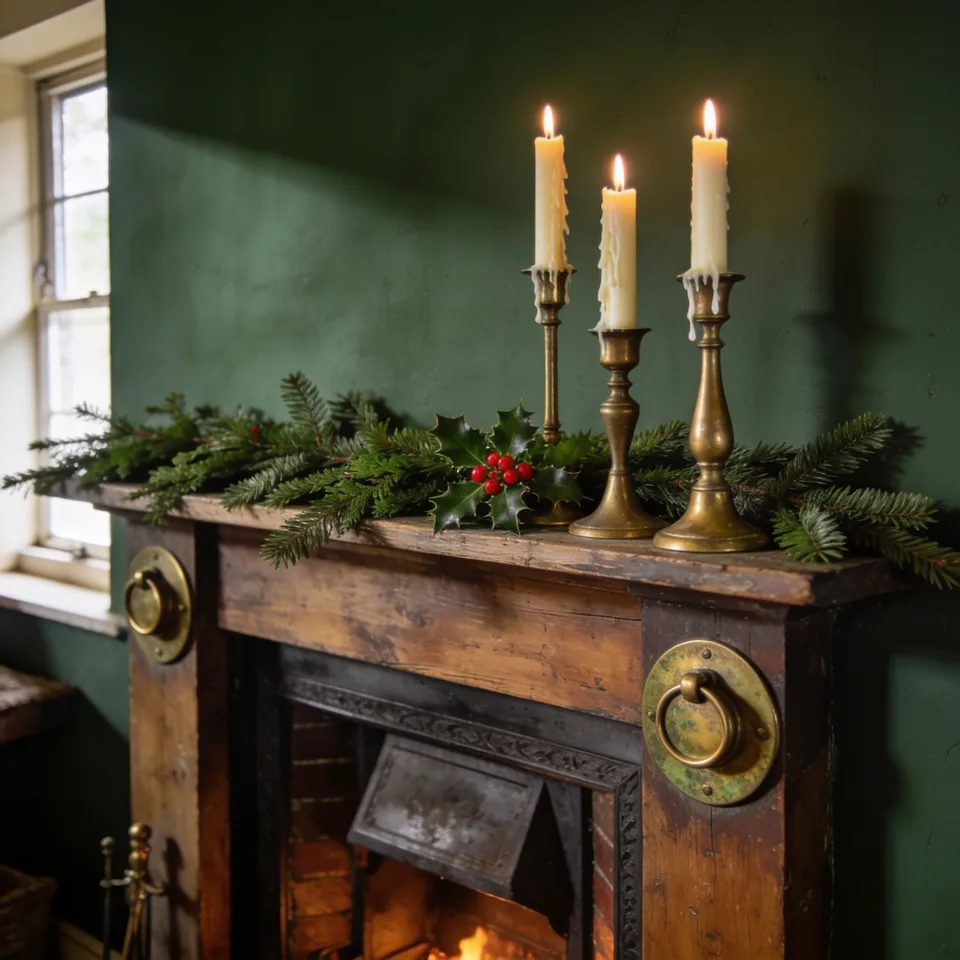
The shortest day of the year lands in this month, and the house should meet it looking as though it knew. Flame is not an accent in December; it is the point. The taper at supper, lit on ordinary Tuesdays rather than saved for the day itself, is the habit autumn taught, and this is the month it pays. Candlesticks are the cheapest abundance the season offers — brass, gathered one at a time from the same secondhand shelves that dressed the autumn, where they stand in ranks priced at pocket change because every house before this one owned six. Unequal heights beat a matched pair: a run of three or five down a green-laid mantel puts flame at different altitudes and sets the wall behind into soft motion. And the overhead stays off. The moody house has been making this case since September — light in pools, corners allowed to go soft — and Christmas is where the case closes, because no room ever looked more kept than one lit by its own candles with green along the shelf. By Twelfth Night there will be wax hardened down the brass, and it can stay. Wax is the month's patina.
Paper and cloth
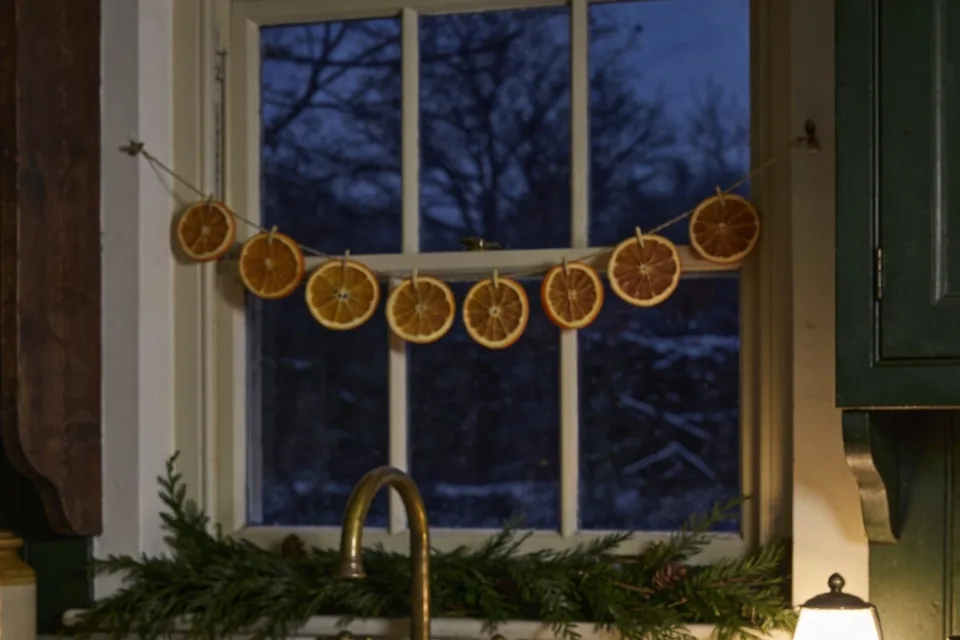
What the box cannot supply, the kitchen table can. This is the quiet half of cottage Christmas decor — the ornaments that get made instead of bought, in materials the house already trusts. Paper stars folded in an evening and hung in the window, where the low sun comes through them like something older than electricity. Orange slices dried on the oven's lowest heat some grey Sunday — the house smells of it for hours, which is half the point — then strung on thread, translucent as amber against the glass. Cinnamon tied in threes with string. A paper chain, if anyone in the house is still young enough to find one glorious. And cloth ribbon everywhere the plastic kind would go: velvet or linen tape ties a true bow, wears soft, and winds back onto its card in January for next year, where curling ribbon exists for one morning. The test for this whole layer is short — it grew, or hands made it, or it will be kept. The best of it passes twice, with the box waiting to decide the third. Printed paper joins the same layer: the six still-life studies in The Cottage Christmas are a home print job, framed or pegged to a string, and they fold back into the box with everything else in January. Every set we make, The Cottage Christmas among them, sits together on our shop page.
The table, once more
Christmas dinner asks the table for everything Thanksgiving asked, and one thing further: that the whole meal happen after dark. The once-a-year cloth is barely back in its cupboard before the once-a-year table is called again — leaves in, chairs conscripted from the corners of the house, settings gathered rather than matched, the transferware and old glass down from the high cupboard — and only the middle changes its language. Where the gourds and crabapples ran in November, cedar lies flat down the cloth, and a few of the box's baubles rest loose in the green where the tapers can find them, throwing back their small silvered light. Everything stays low enough to pass the gravy over. By dessert there will be needles on the linen and wax on the brass, and both are the season signing its work.
Begin with one branch
None of it starts with a plan, and it should not start with the box. Some grey afternoon early in the month, bring home a single pine bough — begged from the tree lot's pile, cut from the back of the yard — and lay it on the sill you look at most, the one over the sink or behind the kettle. Let it be the whole of Christmas for a day or two. It will scent one corner of one room and catch the lamplight by half past four; by the weekend the house will have made it plain where the rest belongs. The box can come down then, into rooms already smelling of pine — which is the order a kept house has always done this in. Green first. Then flame. Then everything it remembers.
Common questions
How do you decorate a cottage for Christmas?
Bring in real greenery, light it with flame, dress the rest in paper and cloth, and let most of what goes up come out of the one box of ornaments that has been doing this for years. The law behind it fits in three words: greenery over glitter. A cut bough arrives carrying its own scent and goes on deepening as the weeks pass, where tinsel and bought garland can only catch light and fling it back. Lay boughs flat along the mantel and the deep sills, stand brass candlesticks among the green, and leave the overhead light off. The whole season, taken slowly, is only those four moves.
Where can you find free greenery for Christmas decorating?
Start at the tree lot. Every lot ends its day with a trimmings pile, branches sawn off so somebody's tree would fit its stand, and a polite question at the gate sends home half the greenery the month will need, free or for a dollar or two. Beyond that, a yard with any evergreen in it can spare a few boughs without showing the loss, an old garden may own holly, and a fence line may be carrying ivy. Once it is home the placing is short work: the mantel first, laid flat, then the deep sills, a doorframe where a nail survives from other years, and a stoneware crock of standing boughs by the door, topped up with water like any cut stems.
Which Christmas greenery lasts longest indoors?
Fir, which hangs on to its needles longer than anything else you can bring in. Pine drapes soft over a mantel edge and lasts nearly as well, cedar lies flat and obedient on a sill, and spruce, generous but the first to shed, takes the spots nobody brushes past. Wherever the green lands, keep it well clear of the radiators, and when the tips brown toward mid-January, out it goes with the tree, its work done.