 Cottage at Home
Free cottage printables: paper for the walls of a kept house
Free cottage printables for a lived-in home — why paper suits these walls, what makes a print belong here, and six botanical prints free from our own rooms.
In this guide
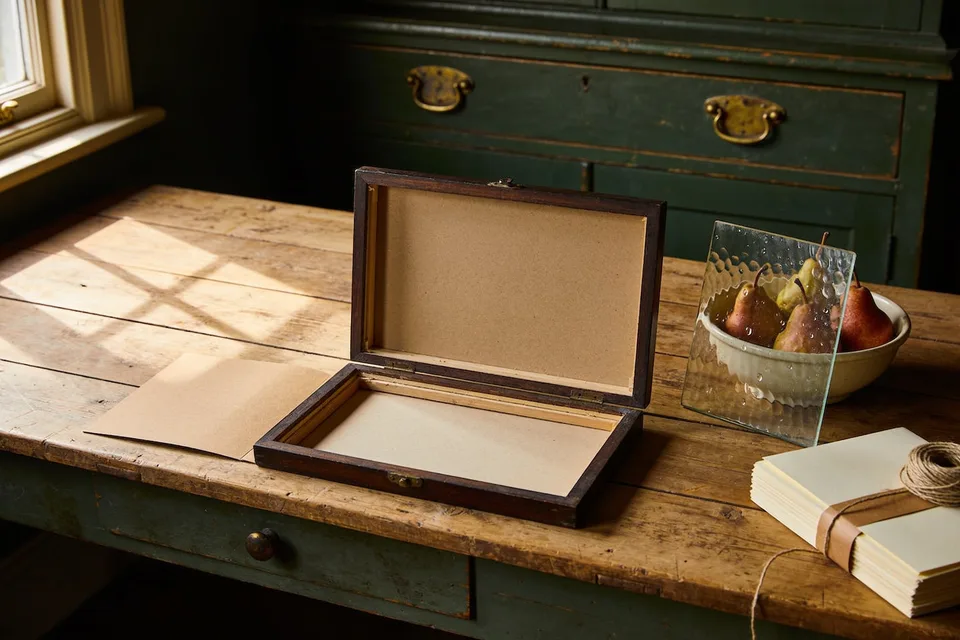
There is a frame lying face-down on the kitchen table with its back off, its glass washed and propped against the fruit bowl to dry. The print easing out of it has hung since June; the one going in is bronze grasses on cream paper, still warm from the printer. The whole operation takes ten minutes, most of which is the kettle. By supper the hall will have turned a season, and the house will have spent nothing but a sheet.
The cheapest honest surface in the house
A print costs a sheet, hangs light, and steps down without ceremony when its season ends, owing nothing and owed nothing. Free printable wall art for a cottage home is not a lesser cousin of real art; it is the wall's version of the seasonal cloth — changed often, stored flat, brought back when its weather returns.
Below the picture rail, a cottage home turns with the year on its own — the wool comes out in September, the stoneware moves forward, the lamps get lit earlier — and the walls, the largest surfaces in every room, are usually the last to hear about it. Not out of conviction; out of arithmetic. Art feels like a purchase, purchases feel permanent, and so the same pale print holds its nail from January to January while everything beneath it changes with the light. Paper undoes the arithmetic.
And free is worth an honest word, because the internet is stacked with free printables and most of them were made for other houses: bright, glossy, lettered with instructions to be grateful. The point of free was never the price alone. It is that the walls can keep a habit instead of defending a decision — turned in ten minutes on an ordinary weekend, with nothing lost if a print earns only one season on its nail.
What makes a print belong here
Three tests, and paper either passes them or hangs somewhere else. Matte, first, and for a working reason rather than a taste: these rooms run on low side light, and a glossy sheet hands every lamp and window back as a white glare sliding across the picture. Matte paper takes lamplight the way wool does — keeps the warmth, returns no shine.
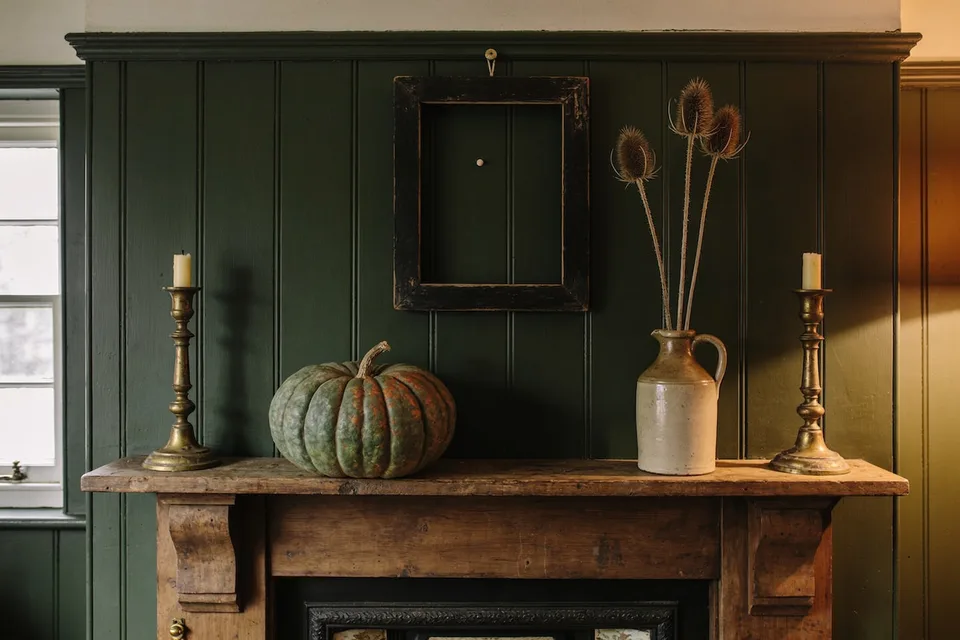
Botanical or still life, second: subjects the windowsill and the walks are already offering, seed heads and branches and the bowl of pears, so the paper agrees with the room instead of performing for it. A print in this house is passed at a foot's distance twenty times a day, and nothing that shouts survives that arrangement — the lettered slogan is read twice and then merely loud. And the colors keep to the house's own shelf — umber, ochre, madder, moss, the deep browns underneath — because a print is a guest on the wall's color and should arrive dressed for it. Deep grounds are the palette's native soil: against the greens and umbers that a darker kitchen makes the long case for, an amber print warms under lamplight the way brass does.
How this house hangs them
Prints go where the household passes and pauses, not where a gallery would put them. The hall wall between the coat pegs and the kitchen door carries a pair at the eye height of someone walking through, which is how a corridor becomes a room. The pantry wall takes small prints among the working things — between the shelves, above the enamel pitchers — where they hang like one more kept object rather than an exhibit. And above the reading chair, inside the lamp's low circle, a print joins the wool and the cup as part of the evening's furniture. Twos and threes, a hand's width apart, set by eye rather than by level; a cluster hung by instrument reads like a hotel corridor, and a cluster set by eye reads like it accumulated, which is the truth.
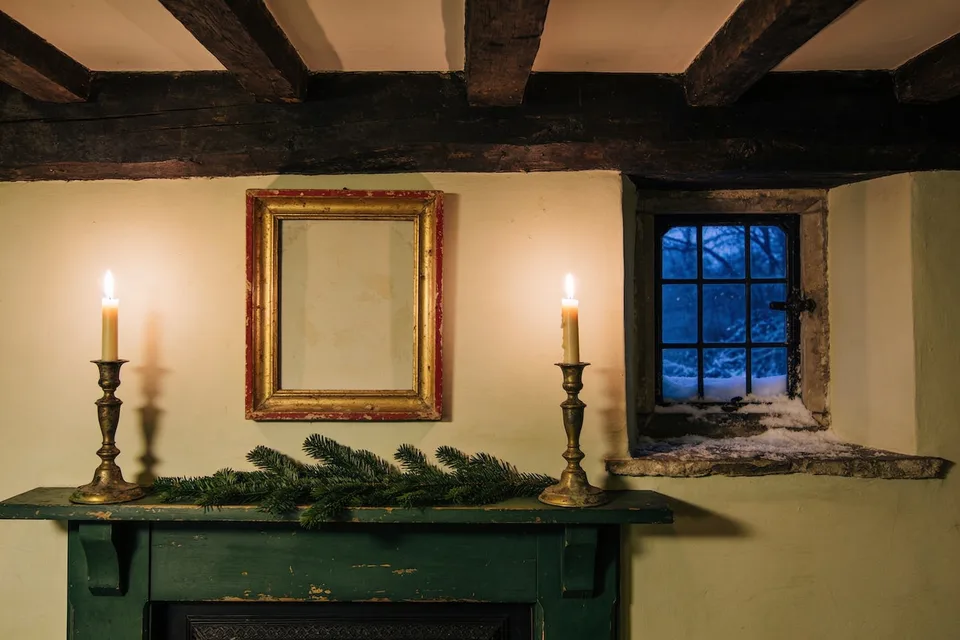
The frames come from the thrift shop, priced for the wood and the glass rather than for the faded certificate inside, which can be thanked and set aside. Oak gone dark, gilt rubbed soft at the corners, glass gone slightly wavy with age — the same habit the kitchen already runs on, things that have already lived, carried up the wall. Matching is neither required nor wanted; six prints in six frames that never met before this wall is not a compromise but the effect. The one wall to refuse is the one taking full sun through bare glass — strong daylight is hard on paper, and the sunniest wall was always better given to a mirror.
The amber autumn pack
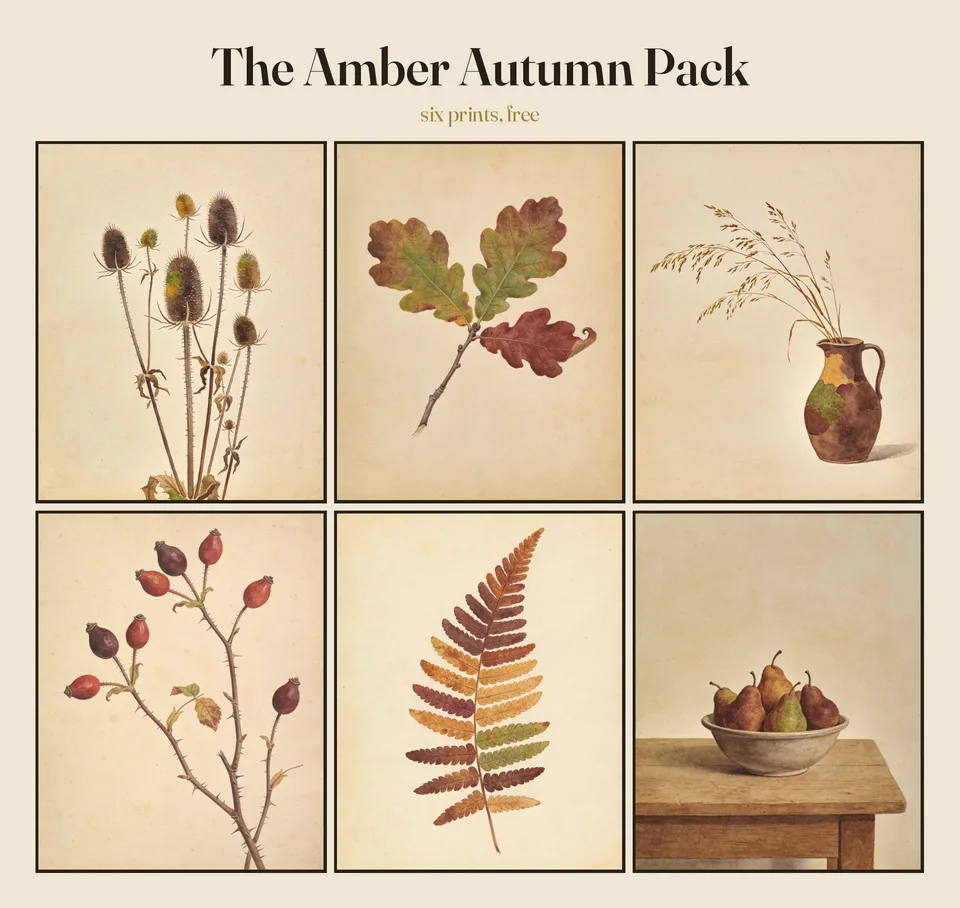
Six prints hang in these rooms from September through November, and they are the natural place to start, because they were made for these walls first — hung, moved, and lived with until each had found its place. A study of papery seed heads holding their posts at the field's edge. A single oak branch caught mid-turn between moss and madder. Dried grasses gone entirely to bronze, leaning the way they lean in the jug. Rosehips, the deepest red in the set, madder on the bare stem. A fern gone over to rust and ochre, frond by frond. And a small still life of russet pears in a plain bowl — the kind of harvest admired for a week and eaten in an evening. All six keep to the amber shelf of colors the whole season runs on, and none of them shouts.
They print at home at anything up to 8×10 inches or A4, on whatever heavy matte sheet the printer will take, and they are sized for the frames the thrift shop actually offers. If they would sit as well in your rooms as they do in these, the pack is yours — free, from this house to yours. Leave an email address and all six will come to you. The pack also keeps a longer guide of its own — the printing, the frames, and the walls it has earned in this house.
The amber autumn pack, free
All six prints, sized to print at home at anything up to 8×10 inches or A4 — from this house to yours.
Six prints by email, and an occasional note from the cottage after that — no more. Leave whenever you like.
When the walls ask for more
The free pack is the September-to-November shift; two larger sets from the same drawing table stay up all year. Six studies of the working kitchen — the copper pot gone green with use, herb bundles, the garlic braid — and twelve studies of a kept house — quilts, lamplight, the hearth kettle — both hang in our own Etsy shop as instant downloads, sized for the same thrift-shop frames. Same walls, same register; these just stay past the season.
Start with the frame
The wall can wait; begin at the table. Tonight, fetch one frame down from wherever the spare ones sleep — the cupboard over the wardrobe, the back of the linen shelf — and bring it to the kitchen. Wash the glass, tighten the corners, stand it empty against the wall while the kettle goes. A frame cleaned and ready is most of the decision already made; the paper part takes ten minutes, whenever the paper arrives.
Common questions
How do I get the free cottage printables?
Leave an email address and all six prints in the amber autumn pack come to you by email, free, from this house to yours. After that there is an occasional note from the cottage, no more, and you can leave whenever you like. Printing is the only cost there is: a print costs a sheet, hangs light, and steps down without ceremony when its season ends.
What size do the prints come in?
Anything up to 8x10 inches or A4, printed at home. All six are sized for the frames the thrift shop actually offers: oak gone dark, gilt rubbed soft at the corners, glass gone slightly wavy with age. Matching is neither required nor wanted, and six prints in six frames that never met before reads like a wall that accumulated, which is the truth.
What paper should I use for printables?
A heavy matte sheet, whatever weight your printer will take. Matte matters because these rooms run on low side light, and a glossy sheet hands every lamp and window back as a white glare sliding across the picture. Matte paper takes lamplight the way wool does: it keeps the warmth and returns no shine.