 Cottage at Home
Disclosure: some links below are affiliate links — buy through one and we may earn a small commission, at no extra cost to you.
Fall cottage decor: an amber autumn that begins with the light
Fall cottage decor ideas for an amber autumn — it begins in late August with the light, and deepens from September lamps to the November hearth.
In this guide
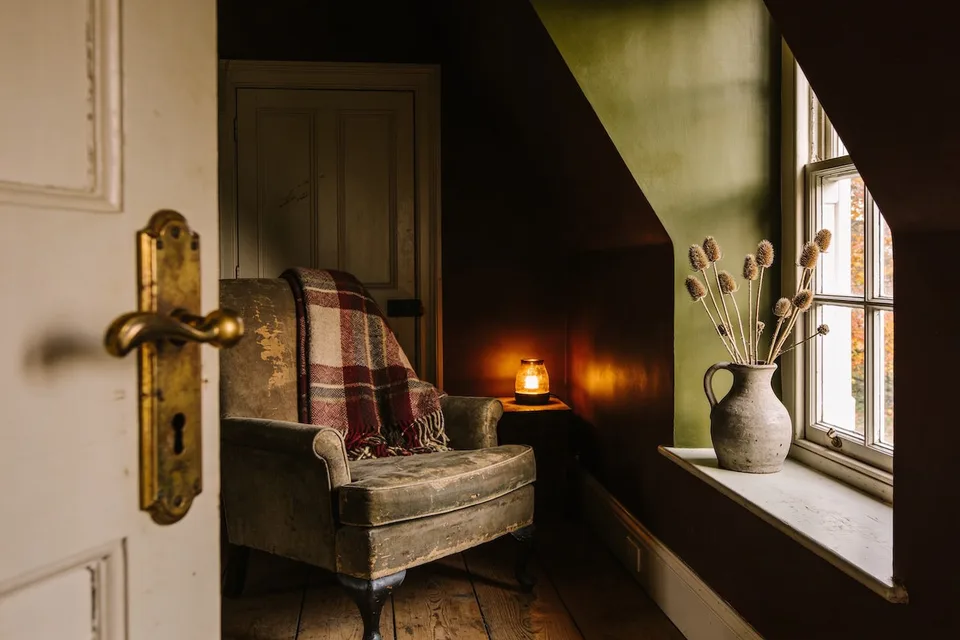
Some evening in the last week of August, the light changes sides. The sun that spent July burning straight and high comes in low across the table by half past six, ambered a shade past honey, and it finds the grain in the oak and the worn place on the chair arm as if it had never noticed them before. The air is still summer. The light is not.
That shift is the true beginning of fall in a house, and it arrives weeks ahead of the shops' version — the bins of bright orange, the plastic garlands, the word harvest spelled out in letters a foot high. Autumn in a cottage is not a display that goes up in one weekend and comes down in another. It is a room deepening by degrees across three months — light first, then color, then texture, then fire — and every stage of it begins with something the house is already doing on its own. This is a guide to following that sequence, from the last days of August to the edge of winter, without ever getting ahead of the room.
Late August: watch where the amber lands
The first act of fall decorating costs nothing and buys everything after it. For a week of evenings, between six and eight, simply watch the room. Notice which wall the low sun crosses on its way down. Notice which corner goes dark first, and where the household drifts as the evening cools — which chair, which end of the table. Do it with a cup of something. This is not a chore; it is the season introducing itself.
The week produces a map, and the map decides the whole autumn. The wall the amber crosses is where warm color will earn its keep. The corner that darkens first is where the first lamp belongs. The chair people drift to is where the wool goes. Skip the map, and a season's worth of things lands in the wrong places — the throw on the sofa nobody sits in after September, the candle on a shelf the evening never reaches. The room runs this rehearsal every August whether anyone watches or not; all it asks is an audience. And no two houses are given the same autumn — a west-facing room drowns in amber while a north kitchen only cools — which is exactly why the week of watching cannot be skipped, or borrowed from someone else's house.
Amber, not orange
The seasonal aisle believes autumn is orange — one bright, single-note pumpkin orange, the same in every store, dyed to be seen across a parking lot. Stand any of it in a window in October light and it shouts. The season outside the glass is quieter and better: umber and ochre, madder and rust, moss going brown at its edges, the deep tea color of turned oak leaves. Every one of those has brown in its base, which is why they hold their warmth in low lamplight instead of glaring under it.
So the rule for everything gathered from here on is short: a note deeper than the shop's version, always. Rust instead of orange, ochre instead of yellow, madder instead of red, and brown welcomed everywhere rather than corrected. These are the colors the room's own amber light was made to land on, and they will still look right at the end of November, when the bright version has begun to look like a party that ended a while ago.
September: lamps before they are needed
Nothing needs buying in September. The month's whole work is light, because light is what the month is quietly taking away — dusk arriving a few minutes earlier each week until suppertime and nightfall meet. The habit to build is lamps at dusk: small ones, warm-bulbed, switched on ten minutes before they are strictly needed, in the corners the August map marked. A room lit low from its corners gathers itself around an evening; the overhead, left to do the job alone, only interrogates it.
Light the year's first candle at the supper table on an ordinary Tuesday rather than saving it for an occasion, which is where the fall supper table begins in earnest — the earlier dark is the occasion. And let the windows begin to help: the thin curtains of July can give way to something with more weight in the hand, drawn as the light goes, so the glass turns soft instead of black when evening comes down early. None of this is decorating in the shopping sense. All of it will change the room more than anything sold in a bin.
Take summer down before autumn goes up
The step most fall decorating skips is subtraction, which is why so many rooms end October fuller than they began it, with autumn perched on top of summer like a coat pulled on over shirtsleeves. Sometime in late September, put July away. The striped cotton throw, the jar of beach stones, the pale bowl that made sense against long bright evenings, the last faded stems of August — into the cupboard with them, gratefully, until they mean something again. Clear the mantel and the windowsills while you are at it, down to nearly nothing.
Then — and this is the part worth defending — let the room stand plain for a few days. Bare sills, an empty mantel, the first wool still folded and waiting. A room paused between seasons is not unfinished; it is listening. The pause does two jobs at once. It lets the August map prove itself, because with the surfaces cleared it becomes obvious where the amber lands and where the dark pools. And it means that when the gathered things arrive they arrive into space, and read as chosen. Autumn set down on a cleared table looks like a season. Autumn wedged in beside summer looks like inventory.
October: texture, and a harvest you can eat
October is when things finally arrive, and the first of them should be wool. A throw with real weight over the arm of the chair the map chose. A runner underfoot where bare feet first notice the season. Cushions gone over to the amber family — umber, madder, moss. Wool takes lamplight the way cotton never quite manages, and it looks better the longer the evenings get, which is convenient, because the evenings are getting longer.
The walls can take the season too, for the price of a sheet of paper. A small print in the amber register — seed heads, a branch caught mid-turn — hung in a frame the thrift shop gave up long ago, on the wall the August map marked. The amber autumn pack is this house's set: six prints, free, drawn from the same umber-and-ochre family as everything else in this guide, printed at home and hung where the amber was always going to land. And when the rest of the house asks for paper of its own — the folded quilts, the oil lamp, the hearth kettle — twelve studies of a kept house hang in our Etsy shop, one to a room.
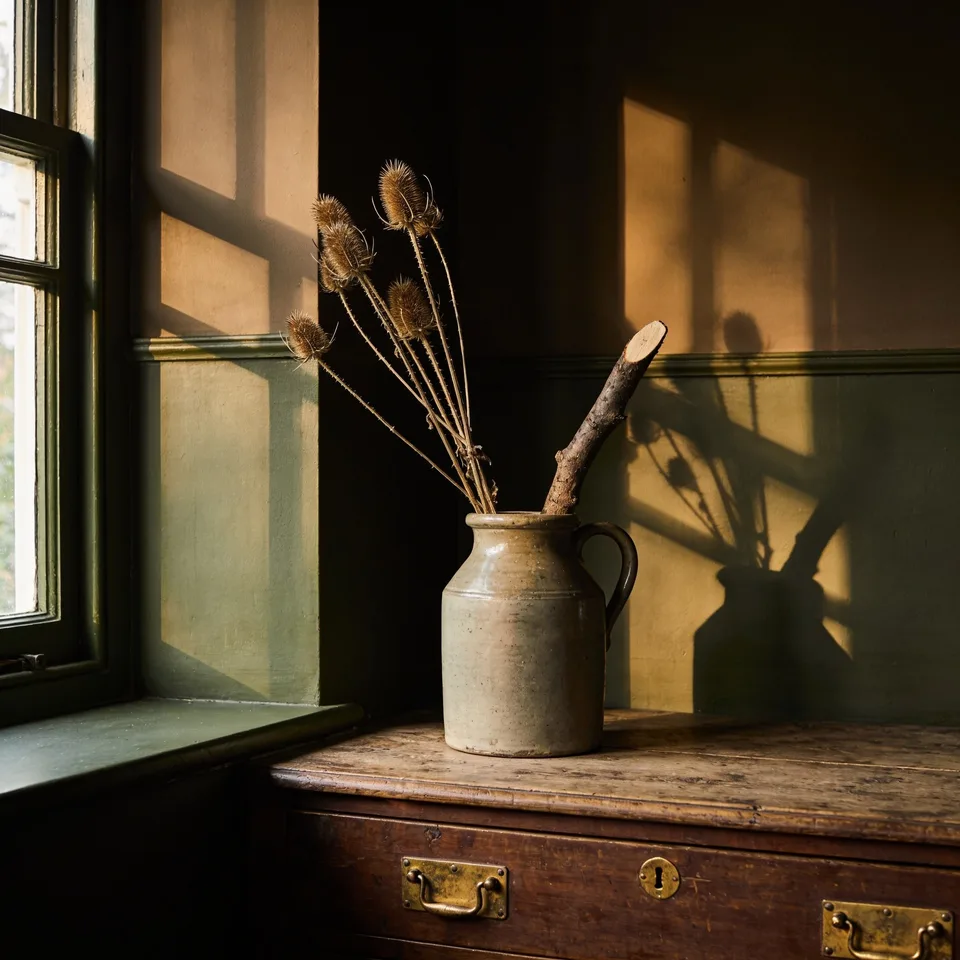
Then the gathered layer, which is where restraint earns its keep. Dried stems cost a walk, not a receipt — seed heads from the edge of a field, a branch just turning, grasses gone to bronze — stood loose in a stoneware jug where the amber hour can find them. Pumpkins are welcome few and real: two or three in the quiet colors, cream and slate-green and tan, on the step or the sill, rather than a heap of the brightest the lot could sell. Those same few pumpkins carry straight into a gentle Halloween uncarved, which saves buying the month a second set of decorations. The grocery store carries the quiet ones now too, shelved in with the squashes and priced as food, because that is what they are. And the truest harvest decor is food that gets eaten — the bowl of apples on the table, pears ripening in a paper bag, quinces if they can be found, scenting the room while they wait. A bowl that empties and refills is alive; a display that cannot be touched is a diorama. When a pumpkin softens, out it goes. The season edits itself, and the room is better for obeying it.
The kitchen is where fall actually lives
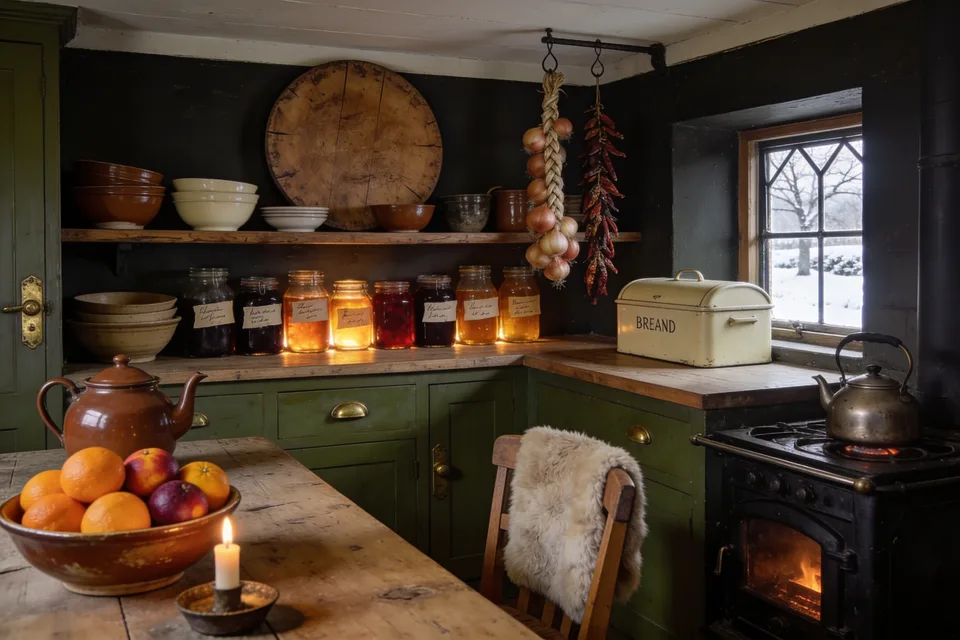
By the middle of October the kitchen has gone back to work. The oven is on again after its summer off, there is steam on the evening windows, something sits at a low mutter on the back burner — and no arranged corner of the house will ever say autumn as plainly as that does. So decorate the kitchen in the terms a kitchen understands: herbs drying head-down from a hook, a shelf where the preserves stand with their dates inked on the lids, the kettle used often enough that the stove never goes quite cold. That preserve shelf is the working open shelf in its harvest month, stocked by the season's work and styled by nothing else — the season's decor here is mostly the season's work, left where the work happens and allowed to be seen.
This is also the room where autumn's deeper colors pay first and pay longest. The amber hour lands on worktops and open shelves; steam and lamplight flatter deep green and umber walls the way no noon ever will. If any room in the house has been waiting for a darker wall, it is this one, and fall is its season — the dark cottage kitchen is the long guide to that turn, paint chosen against your own light and brass left to age in peace. Painted in September, a deep green kitchen has settled into itself by the first November supper that needs it.
November: the turn toward the hearth
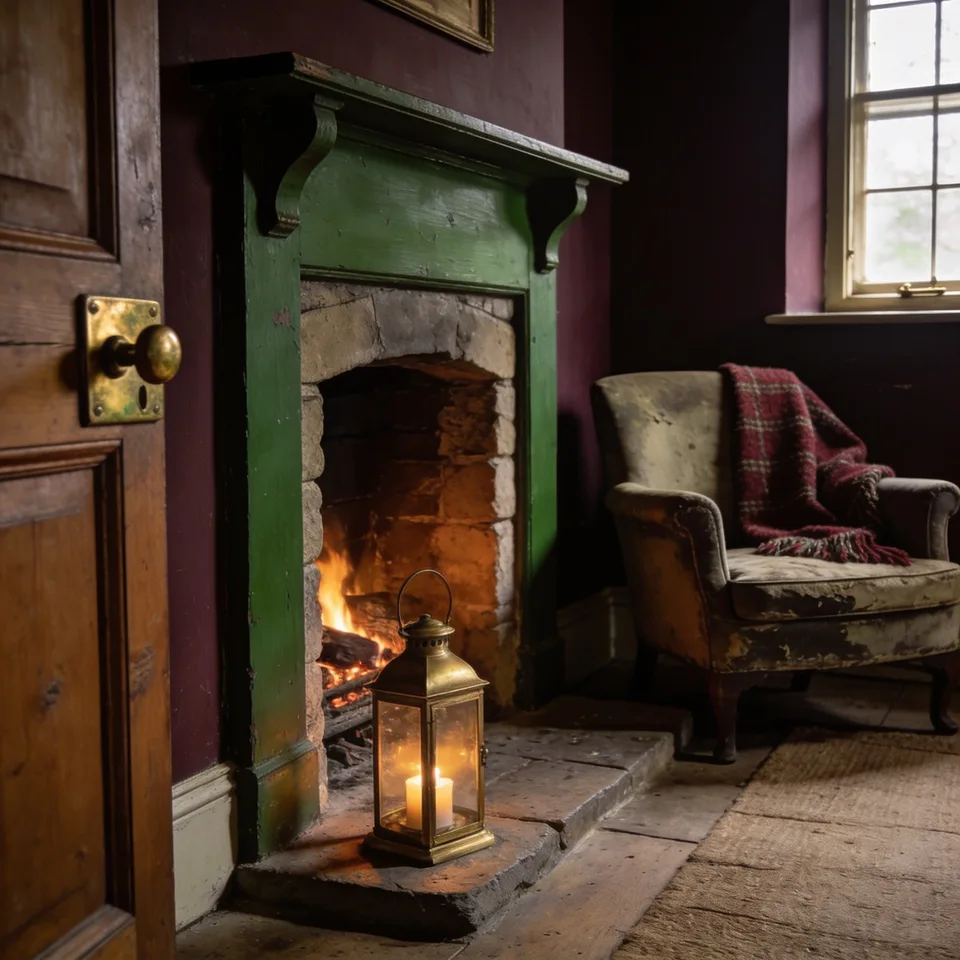
Somewhere in November the season changes registers. The harvest layer thins — pumpkins softened and gone, branches bare, the jug down to its seed heads — and what the room wants now is not abundance but fire. If there is a fireplace, this is its month: swept, laid, and lit earlier in the evening than strictly necessary, with the mantel above it holding almost nothing. A candlestick, a small dark picture, air. The fire is the decoration; everything else is audience.
If there is no fireplace, the hearth gets built from its parts, because a hearth was never really a chimney — it is the warm low place a household points its chairs at when the evenings grow long, and any room can have one. A lantern of candles set low, a lamp with a warm shade at knee height rather than eye height, the wool within arm's reach, the chairs angled in. What makes it read as a hearth is that the light sits low and to one side and moves a little, and that people face it.
November also holds the one meal that asks the table to be more than it is, and the thrifted holiday table is how a kept house answers it: the once-a-year cloth, settings gathered singly, odd chairs pulled up.
Elsewhere the month is about weight. Double the wool — a second throw, a small rug laid over the big one where feet land first — and draw the heavier curtains at dusk so the room closes like a coat. By the end of November the house should feel as if it has pulled its chair closer to the stove, which is, after all, what everyone in it has done.
By December the room is already dressed
Here is the quiet payoff of taking autumn as a slow ramp instead of a display: nothing has to come down. The bright-orange version of fall cottage decor ends in a sad weekend — orange into boxes, red out of boxes, the room bare for an afternoon in between. The amber version simply keeps deepening. Umber and moss stand as kindly against snow-light as they did against turned leaves; the wool has gone from pleasant to necessary; the lamp habit and the Tuesday candle were always winter skills, learned early. December asks for one exchange only — the last dried stems give way to something green and sharp-smelling, pine or cedar or whatever the walk provides — and the room that started paying attention in August is dressed for midwinter without a single box coming down from the attic.
The rest of our seasonal notes take the year's other turns the same way — one room at a time, begun where the light begins.
Tonight, before anything is bought
Dusk comes earlier than it did last week; a few minutes before it arrives, switch on one small lamp in the corner of the room that darkens first. Then sit where the household usually sits and watch what the last of the amber does on its way out — which wall it crosses, where it pools, what it warms. Where it lands is where autumn starts. The rest of the season is just agreeing with it.
Common questions
When should you start decorating for fall?
Late August, when the light changes sides. The first act costs nothing: spend a week of evenings watching which wall the low sun crosses, which corner goes dark first, and which chair the household drifts to as the evenings cool. That map decides where the warm color, the first lamp, and the wool all go.
What colors work for fall decor besides orange?
Rust instead of orange, ochre instead of yellow, madder instead of red — and brown welcomed everywhere rather than corrected. These deeper notes have brown in their base, so they hold their warmth in low lamplight, and they still look right at the end of November, when the bright version has begun to look like a party that ended a while ago.
When do fall decorations come down?
In this house, mostly they don't. Umber and moss stand as kindly against snow-light as they did against turned leaves, and the wool has gone from pleasant to necessary. December asks for one exchange only — the last dried stems give way to something green and sharp-smelling, pine or cedar or whatever the walk provides.