 Cottage at Home
Disclosure: some links below are affiliate links — buy through one and we may earn a small commission, at no extra cost to you.
The cottage Christmas kitchen: dried oranges, evergreen, and the scent of baking
The cottage Christmas kitchen — dried oranges on the oven's lowest heat, evergreen along the open shelves, and the season made where the work is done.
In this guide
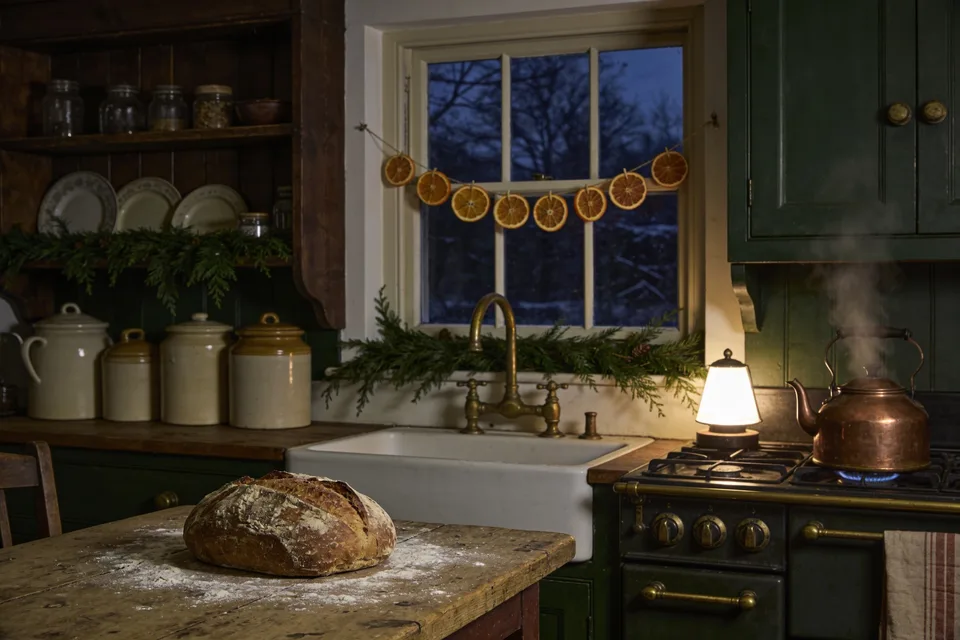
By four in the afternoon the window over the sink has gone dark, and the kitchen has already answered it. The oven has been on since two, and the whole room smells of orange — sweet, sharp, somewhere near marmalade caught early. Steam beads on the black glass. On the rack by the stove a loaf cools, too warm to cut, ticking quietly to itself.
Every other room in the house has to be dressed for December. The sitting room waits on its greenery and its ornament box, the mantel on its brass — the whole slow ceremony of cottage Christmas decor, green first, then flame, then everything the house remembers, most of it done on one Saturday. The kitchen is the exception. A Christmas kitchen is not dressed; it is worked. It is the working heart of a cottage Christmas, and nearly everything that makes it look the part — the oranges on their thread, the loaf in plain sight, the steam, the smell — is the side effect of something the room was doing anyway. December in here is not a decorating job. It is a permission: let the work show.
Oranges dried where they will hang
The season's first decoration is made, not unpacked, and it is made in this room. Oranges — the cheap net-bag kind, nothing special — are sliced a little under a quarter inch, laid on a wire rack, and given to the oven at its lowest setting for most of an afternoon, the door propped a finger's width to let the damp out. There is no hurrying it and no reason to try. Long before they are done, the drying has taken the ground floor, and that is the kitchen's oldest advantage stated plainly: a diffuser imitates a kitchen; an oven is one. Scent from a bottle arrives finished. Scent from the oven is still happening, and the difference carries clear across a house.
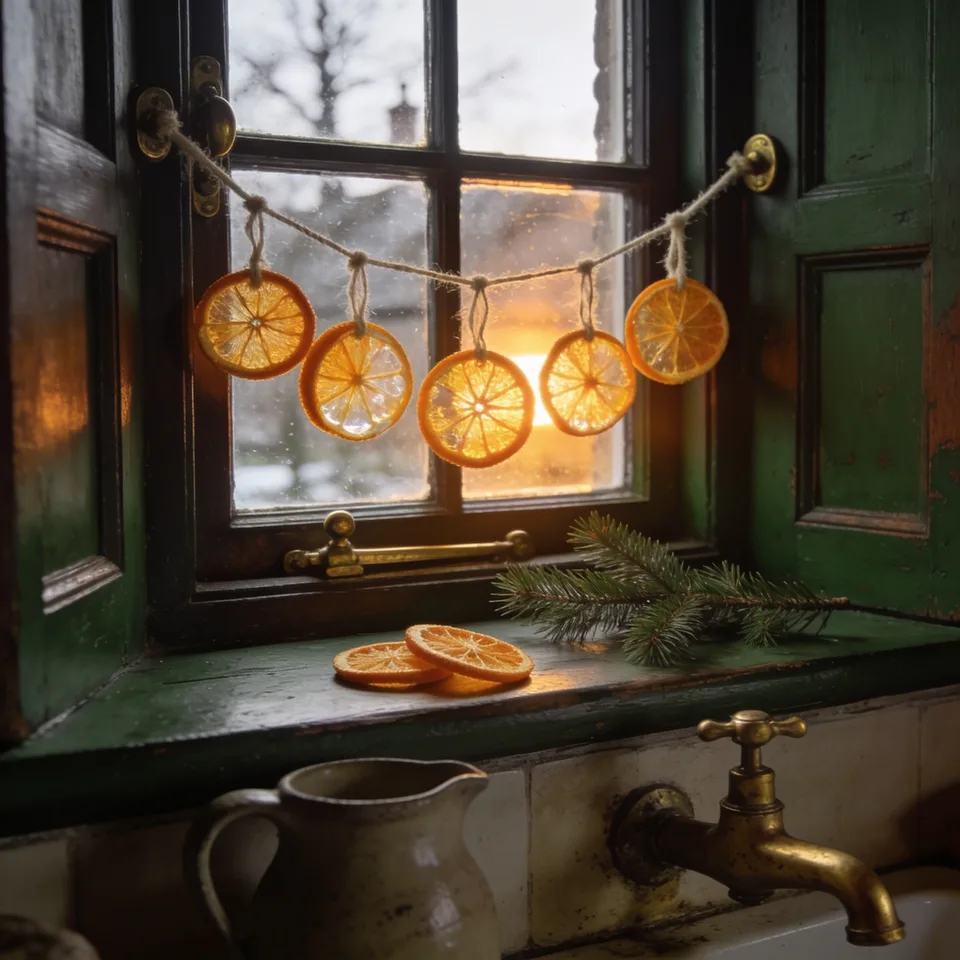
They come out leathery and lit from within — stained-glass amber, each slice holding its wheel of segments like a small window. Thread them on linen string, a knot between each so they hang single file, and give the first string to the window over the sink, where the low sun can find them at the one hour it appears. Loose slices go where they land: along a shelf, on the sill, into a bowl with cinnamon sticks and whole cloves. Make more than seems sensible; the rest of the house will come asking, and the slices that survive to January keep for next year.
Evergreen along the open shelf
Cedar is the shelf's evergreen. It lies flat, stays put, and drapes an inch over the edge without knocking anything off; laid along the front of the open shelf, it makes a low green hedge for the everyday stoneware to stand behind. The shelf's law does not lapse in December — everything up there still earns its place by working — but the green earns its way honestly: scent, calendar, and winter color in one. The ambers and rusts that carried the kitchen through fall hand over to deep green and citrus with hardly a seam, because half of what they stood among — the crocks, the copper, the scrubbed wood — was the winter palette all along.
Pine takes the deep sill, one branch laid the window's width, often the first green in the house, where the dish steam keeps it fragrant for weeks. All of it stays well clear of the burners. Dry needles and a lit ring have no business meeting; the stove is the one surface December leaves bare.
The stove stands in for the hearth
The kitchen has no mantel and does not miss it. The stove is its fireplace, and December dresses it with work instead of ornament. The kettle goes on at four because the dark asks for it. A small pot sits at the back over the lowest flame — cider, or only water, with a broken cinnamon stick and a clove-studded curl of the morning's orange peel — the mulled smell without the occasion, doing for this room what the fir does for the mantel. The red-striped towel that spends the rest of the year in the drawer takes its post on the oven rail. When the cooking ends, the ceiling light goes off and the counter lamp comes on: the dark kitchen has been arguing for lamplight since September, and in a month gone black by half past four the argument wins itself. Brass and copper were made for that light; they answer one low bulb from across the room.
Baking left out where it can be seen
A loaf cooling on a rack decorates a kitchen more honestly than anything bought for the purpose, and gingerbread does it twice — once baking, once cooling — with a scent that has meant December for as long as ovens have had doors. The cutter tin comes down: stars, a bird, a heart with one dented shoulder, shapes that arrive by inheritance more often than by purchase, the way everything in a grandmother's kitchen arrived. None of it needs hiding. Biscuits cool where they always have, mince pies stack on the cake stand, the gingerbread waits under a cloth like something with an appointment. Behind its door, the pantry goes into its deep-winter stocking — dried fruit soaking somewhere cool, the spice shelf now the busiest in the house, the flour and both sugars standing forward because they will be wanted again by the weekend. A pantry stocked for December is not storage. It is intent, shelved.
The table keeps one working end
The kitchen table is not styled for the season; it is divided. One end works — floured by mid-morning, wiped by supper, the rolling pin and the peel bowl never quite making it back to the drawer — and the other end keeps the daily meal, with the month's one concession standing on it: a brass candlestick, its taper lit at supper on ordinary Tuesdays, and a bowl of clementines that counts as decoration right up until somebody eats it. Nothing here is arranged; it is interrupted, and a table interrupted mid-gingerbread outranks any centerpiece assembled to be admired. Guests drift into this room anyway, whatever the sitting room is wearing. They always have. The kitchen at Christmas is where the season is made, and everyone in the house can smell it.
Start with two oranges
No list, and nothing to buy. On the first gray Saturday of the month, slice two oranges thin, set the oven as low as it goes, and prop the door with a wooden spoon. The afternoon will smell like the season arriving early, which is most of what was wanted, and by evening a short string of amber hangs in the window while the room starts saying what it wants next — a branch for the sill, cedar along the shelf, the striped towel out of the drawer. Let it. The rest of a cottage Christmas gets made in this room anyway. It may as well look like it.
Common questions
How do you dry orange slices in the oven for Christmas?
Slice them a little under a quarter inch, lay them on a wire rack, and give them to the oven at its lowest setting for most of an afternoon, with the door propped a finger's width to let the damp out. The cheap net-bag oranges are exactly right, and there is no hurrying it and no reason to try; long before they are done, the smell has taken the ground floor. They come out leathery and lit from within, each slice holding its wheel of segments like a small window. Thread them on linen string with a knot between each so they hang single file, and give the first string to the window over the sink. Make more than seems sensible, because the slices that survive to January keep for next year.
How do you decorate a kitchen for Christmas?
Mostly, you let the work show. A Christmas kitchen is worked rather than dressed, and nearly everything that makes it look the part, the orange slices on their thread, the loaf cooling in plain sight, the steam and the smell, is the side effect of something the room was doing anyway. What you add is green: cedar laid along the front of the open shelf, where it lies flat and makes a low hedge for the everyday stoneware to stand behind, and a pine branch on the deep sill, where the dish steam keeps it fragrant for weeks. Keep every needle well clear of the burners; the stove is the one surface December leaves bare. Then a brass candlestick at the table's meal end, its taper lit at supper on ordinary Tuesdays, and a bowl of clementines that counts as decoration right up until somebody eats it.
How do you make the kitchen smell like Christmas?
Give the oven an afternoon of oranges, then keep a small pot going at the back of the stove. Slices drying on the lowest heat take the ground floor long before they are done; a diffuser imitates a kitchen, but an oven is one, and scent from the oven is still happening where scent from a bottle arrives finished. After the drying, set a small pot over the lowest flame with cider, or only water, a broken cinnamon stick and a clove-studded curl of the morning's orange peel: the mulled smell without the occasion, doing for this room what the fir does for the mantel. Gingerbread earns its place twice, once baking and once cooling, with a scent that has meant December for as long as ovens have had doors.