 Cottage at Home
Disclosure: some links below are affiliate links — buy through one and we may earn a small commission, at no extra cost to you.
The cottage pantry: a room in its own right
Cottage pantry ideas for the working storeroom — shelves one jar deep, labels that tell the truth, a checkerboard floor underfoot — the room guests never see, kept well anyway.
In this guide
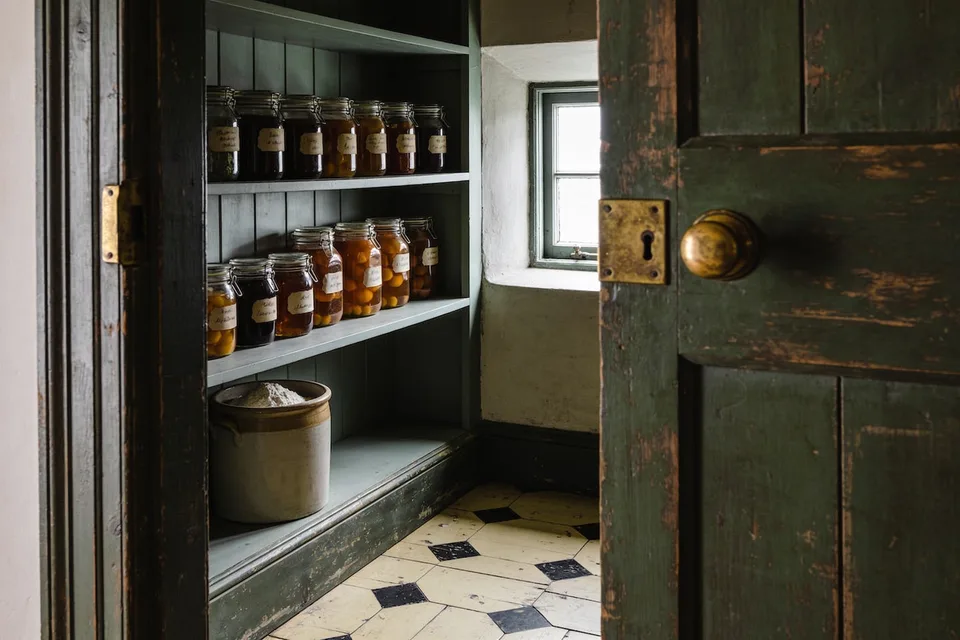
The door is the last one off the kitchen, and it opens onto cooler air. One small window, north-facing, lets in a light that has never been bright in its life, and the shelves take shape in it — rows of glass with pale and amber insides, a crock of flour on the low deep shelf, onions shedding papery skins in a wire basket. Underfoot, painted checks have worn through to the wood where the feet turn at the threshold. It smells of apples, vinegar, and cool plaster, which is the smell of food being kept.
The room guests never see
The kitchen works in public. Its shelves face the table, its pots perform at every supper, and whatever stands in the open out there is seen a dozen times a day — which is why the working shelf earns its places by the week, and why anything slower went behind a door. The pantry is that door, grown into a room. Nobody sees it but the household, no guest will ever admire it, and in the old kept houses it is very often the best-ordered room under the roof — because order here was never a look. It is a tool. A pantry in good keeping is a list you can walk into: the state of the flour, the depth of the jam, the last of the tomatoes, all read in one sweep from the doorway, and the household runs differently when the stores can be read.
Square footage has nothing to do with it. A walk-in larder qualifies, and so does the closet under the stairs, the deep cupboard by the cellar door, an armoire drafted into service in a hallway. A pantry is a practice before it is a floor plan. What makes the room is the keeping.
Shelves one jar deep
The kitchen shelf answers to reach; the pantry shelf answers to sight. Every pantry that goes wrong goes wrong the same way — a second bag of rice rides home because the first was hiding behind the tins — and the cure is geometry, not discipline. From eye level up, the shelves run shallow: one jar deep, so nothing can stand behind anything, and the stock reads like a shelf of spines. At the waist, one deeper run for the working crocks and the tins that come and go. At the floor, the deepest shelf of all for what is heavy and honest about it — the sack, the crate, the stoneware crock keeping potatoes in the dark.
Set the spacing to the jars, not to a builder's default. A hand's height over the tallest lid is gap enough; taller gaps breed a second layer of clutter on top of the first. The planks themselves want to be plain and a little overbuilt, painted or waxed, because a run of full quarts is heavier than it looks.
Jars, and labels that tell the truth
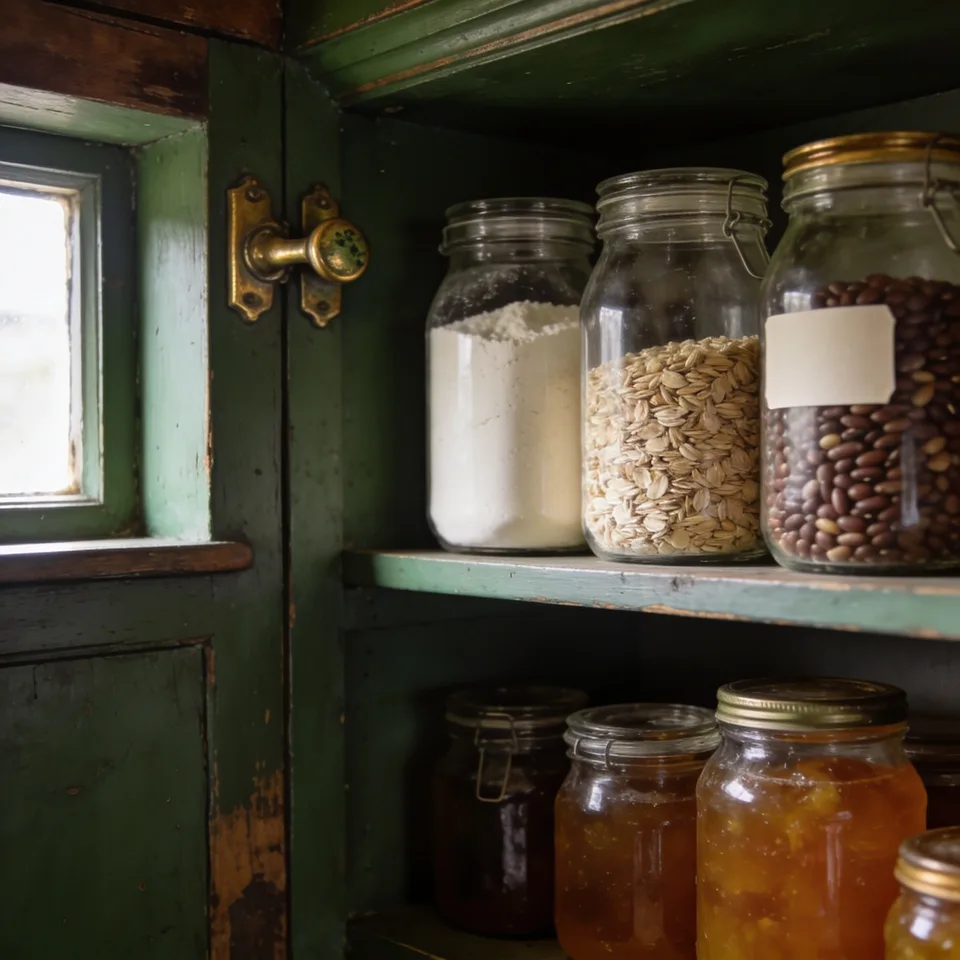
Not everything wants decanting. The jar earns its keep only where the stock turns over — flour, oats, sugar, rice, the everyday tea — things bought often and drawn on daily, because glass confesses its level at a glance, and the jar is a gauge before it is a container. What arrives in a tin that already does the job can stay in its tin; a pantry of nothing but matched glass has crossed over into display, and display is the kitchen's department.
The label is bookkeeping, not decoration. Paper, a pen, the contents and the month — a label without a date is only half telling the truth, and the date is the half that matters when two jars of the same pale powder stand side by side. New stock goes in behind; the old comes forward to be used first. And the preserves shelf keeps the oldest ledger in the house — quarts of tomatoes from one long afternoon, jam labeled in a hand you would know anywhere. A shelf like that is about as handed-down as a room gets; the grandmother's kitchen runs on exactly this kind of keeping, and the pantry is where the habit lives on.
Cool, dark, and glad of it
The pantry thrives on everything the rest of the house fights. The north wall, the small window, the stone-cool floor — every one of them is an asset in here. This is old knowledge: the English cottage kitchen kept its larder on the cold side of the house, with a slab of slate or marble for the butter and gauze at the window, long before refrigeration had anything to say about it, and the reasons have not expired. Cool and dim is simply where food keeps best — butter slower to slump, potatoes not greening, the oils and vinegars out of the sun.
Dim rooms also change the arithmetic of paint. The case for deep color in a daylight room is made carefully, with a week of swatches, in the dark cottage kitchen this storeroom serves; in here the caution can be skipped, because the room lives by one warm bulb and whatever light follows you in from the kitchen. Walls in a deep green or umber cost this room nothing and give the shelves everything — pale flour and amber jam stand forward against depth like type on a dark page.
A checkerboard floor, and one small print
A working room can allow itself one flourish, and the pantry's is traditionally underfoot. Painted checks — cream and near-black, the squares set on the diagonal so a narrow room walks wider — cost two quarts of floor enamel and a patient weekend over old boards. Cream rather than white, because cream forgives flour, and flour is this floor's weather. The finish improves as it fails: checks worn through to wood at the threshold are the room's service stripes, proof that the door swings daily.
If the walls want anything, it is one modest thing beside the door, hung low where the eye lands while the hands are busy. A botanical suits a room of jars, and the free set of cottage prints sits in the same quiet register as the handwritten labels. If the one it wants is a kitchen study rather than a botanical, Heritage Kitchen in our own Etsy shop holds six to choose the one from. One is the dose. The pantry is not a gallery, and it would be the first room in the house to say so.
Write the list in the doorway
Nothing needs building this week. Before the next shop, carry the pencil to the pantry and write the list standing in the doorway — the shelves will dictate it. The gaps name themselves, the jar running low asks first, and the quart count at the front says whether the garden needs to hurry. Anything that has to be hunted for, anything the doorway cannot see, is the first candidate for a shallower shelf and a place one jar deep. A kept pantry writes its own shopping list; standing in the door with a pencil is how the keeping begins.
Common questions
How deep should pantry shelves be?
One jar deep, from eye level up. Shallow shelves are the cure for the way every pantry goes wrong — a second bag of rice rides home because the first was hiding behind the tins — and the cure is geometry, not discipline: when nothing can stand behind anything, the stock reads like a shelf of spines. Keep one deeper run at the waist for the working crocks and tins that come and go, and the deepest shelf at the floor for what is heavy — the sack, the crate, the crock keeping potatoes in the dark. Set the spacing to the jars themselves; a hand's height over the tallest lid is gap enough, since taller gaps breed a second layer of clutter on top of the first.
Do you need a walk-in pantry?
No. A pantry is a practice before it is a floor plan, and square footage has nothing to do with it — a walk-in larder qualifies, and so does the closet under the stairs, the deep cupboard by the cellar door, or an armoire drafted into service in a hallway. What makes the room is the keeping: shelves that can be read in one sweep from the doorway, so the state of the flour, the depth of the jam and the last of the tomatoes are all legible at a glance. The household runs differently when the stores can be read, whatever the size of the door they sit behind.
Should you put all your pantry food in matching jars?
No — the jar earns its keep only where the stock turns over. Flour, oats, sugar, rice and the everyday tea belong in glass, because glass confesses its level at a glance and the jar is a gauge before it is a container. But what arrives in a tin that already does the job can stay in its tin; a pantry of nothing but matched glass has crossed over into display, and display is the kitchen's department. Spend the effort on the labels instead — paper, a pen, the contents and the month — because a label without a date is only half telling the truth when two jars of the same pale powder stand side by side.