 Cottage at Home
Disclosure: some links below are affiliate links, and if you buy through one we may earn a small commission, at no extra cost to you.
Cottage lighting ideas: warm lamps, room by room
What makes lighting look cottage: several low, warm lamps in place of one bright ceiling light. What to use in the living room, kitchen, bedroom and outdoors.
In this guide
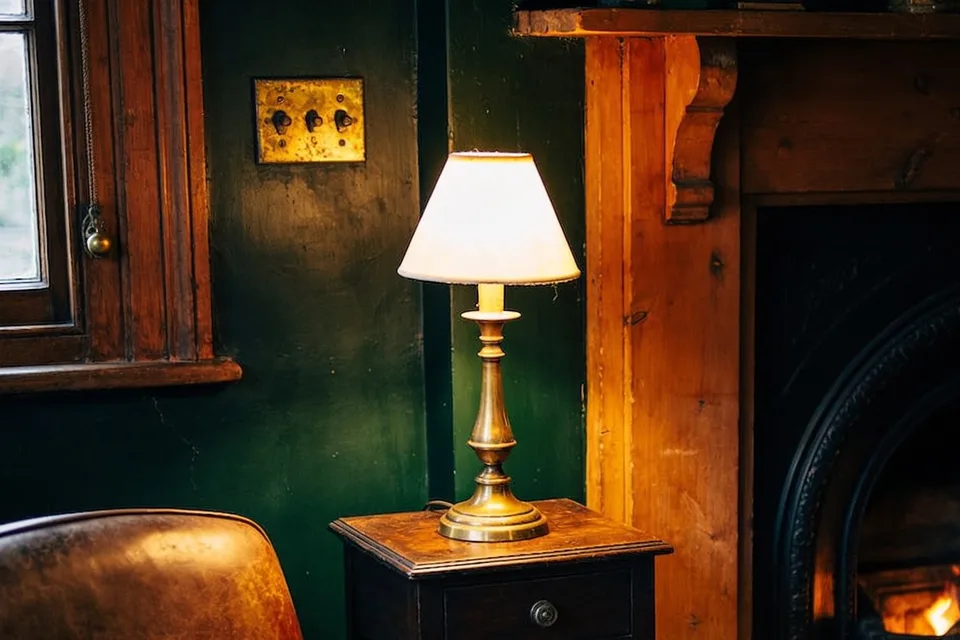
Cottage lighting is several small, warm lights placed low, in place of one bright light on the ceiling. A lamp by the chair, another across the room, a pendant hung low over the table, warm bulbs in all of them. Light the places where people sit and work, and leave the rest of the room soft. That is the whole idea, and the rooms below are what it looks like in practice.
What makes lighting look like a cottage
Light that looks cottage comes from the side and from below eye level, in pools, rather than from the middle of the ceiling in one even wash. It is warm, never white, and there is more than one source in the room, so you can see the walls, the wood and the corners rather than only the floor.
Old cottages were lit by fires, candles and oil lamps, and every one of them sat low in the room and gave a small circle of warm light with soft dark around it. The rooms still look right that way. A single ceiling fixture does the opposite: it flattens everything, shines in your eyes when you look up, and leaves the corners grey. That is why a dark cottage living room runs on pools of lamplight rather than a wash, and why the same rule turns up in every room on this site.
So the ceiling light stays, but it becomes the light for cleaning, for finding a lost earring and for the morning in midwinter. In the evening the lamps do the work. Shop for lamps, not fixtures.
Cottage lighting for the living room: three lamps and the big light off
Give a living room three lamps: a reading lamp by the chair you use most, a second lamp on the far side of the room so that corner is not left dark, and a small one low down on a shelf, the mantel or a deep sill. Use warm bulbs and turn the ceiling light off at dusk.
The reading lamp wants its bulb at about shoulder height when you sit, so the light falls on the page and not in your eyes. A table lamp with a fabric shade on a small table beside the chair is the cottage answer, and an old brass one with the lacquer worn off looks better than anything new. The far lamp can be smaller. Its job is to stop the room ending at the edge of your chair.
The low lamp is the one people leave out, and it is the one that makes the room look lived in at night. It lights the books on a shelf, or the brass on the mantel, and it puts a little warm light near the floor, where a fire used to. If you have a working fire, the fire is that third light.
Shades matter more than bases. A cream, pleated or linen shade lets the light glow through its sides as well as pool below. A pleated lamp shade on an old base is one of the cheapest changes in the house. Then draw the curtains at dusk and the room closes in around the lamps.
Cottage lighting for the kitchen: a low pendant and a lamp on the counter
Hang one pendant low over the kitchen table, with about 75 to 90 centimetres (30 to 36 inches) between the tabletop and the bottom of the shade, and stand a small lamp on the counter. Use the ceiling light while you cook and turn it off when you sit down to eat.
An enamel or glass shade suits a cottage kitchen best: they were made for working rooms, they are easy to wipe and they throw the light down onto the table. An old enamel pendant light with a few chips in the rim is about right. Have an electrician hang it if there is no fitting over the table already.
The counter lamp is the trick most kitchens are missing. The moody cottage kitchen calls it the single fastest change in the whole room, and the cottage kitchen table uses the same warm bulb over supper. Choose a small lamp that can stand somewhere dry, away from the sink and the kettle, and leave it on through the evening after the cooking is done.
Cottage lighting for the bedroom: a small lamp on the side you read from
Put a small lamp on the bedside table on the side each person reads from, and use it in place of the ceiling light at bedtime. Choose a fabric shade and a warm, low bulb. A wall light on a swing arm does the same job where a bedside table will not fit.
The bedroom is the room where the ceiling light does the most harm, because you are lying down and looking straight up at it. A lamp at the height of the mattress lights the page and the pillow and leaves the ceiling dark. The English cottage bedroom is lit this way, and so is the guest room, where a lamp the visitor can turn off from the pillow is one of the five things the room needs.
Keep the switch within reach of the pillow. A lamp you have to get out of bed to turn off is a lamp that gets left on, or never used.
The hall, the stairs and the bathroom
Light a hallway with one small lamp left on at the turn of the stairs or on the landing, on a plug timer, and keep the ceiling light for cleaning. In a small bathroom, a pair of wall lights either side of the mirror light your face evenly and look far better than a single light overhead.
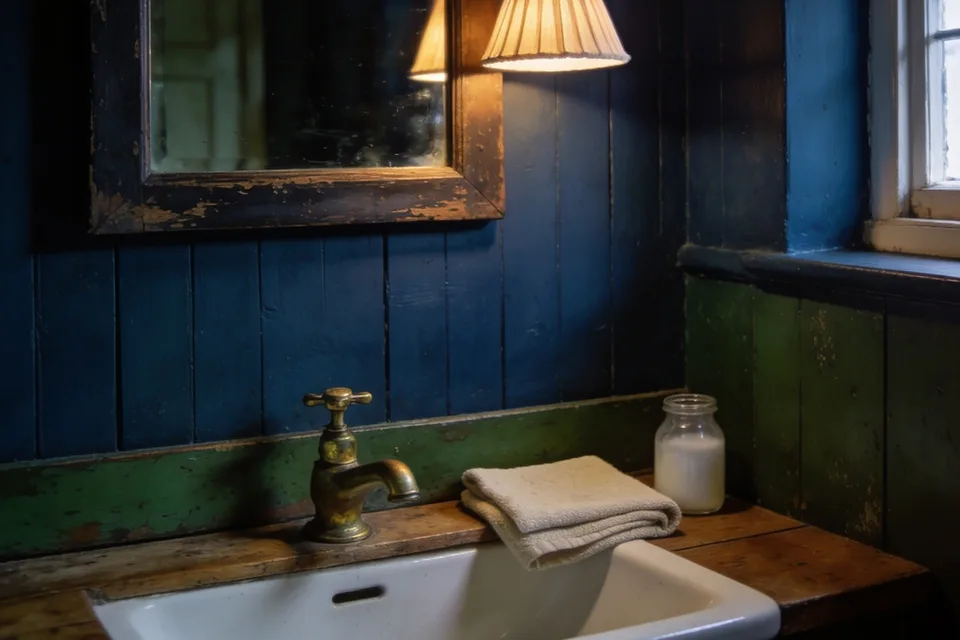
The cottage hallway goes further into the landing lamp and why an old lantern suits a long hall better than a flush fitting. In the bathroom, wall lights at about face height, one each side of the mirror, stop the shadows a ceiling light throws under your eyes; the moody cottage bathroom uses a pair of small brass ones with pleated cream shades. Bathroom lights must be rated for a damp room, so buy them new for that job, or have an electrician check old ones before they go up.
Outdoor cottage lighting: warm, low and pointed down
Outdoors, use as little light as you can: one shielded light by the door that points down, a lantern on the table for the evening, and a flashlight for the path. Keep the bulbs warm and turn them off when nobody is outside. At a lake cottage, the dark and the stars are half of why you came.
DarkSky International's five principles for outdoor lighting put it in five words: useful, targeted, low level, controlled and warm-coloured. In practice that means a light only where someone walks or works, a fitting that hides the bulb and points it at the ground, the dimmest bulb that does the job, a timer or a switch you actually use, and warm light rather than white. A bright floodlight on a dock lights up the water, the trees and the neighbours across the bay, and makes everything past its edge look blacker.
The lake rooms on this site already work this way. The Muskoka room puts a lamp against the house wall and lanterns at the open end. The bunkie keeps a flashlight on a hook by the door, leaves one light on at the house to walk back to, and puts a single solar light at the step rather than a row of them along the lawn. At a cottage in town, a lantern with a real flame by the front door gives a porch the same warm, low light.
Bulbs, shades and switches
Use warm white bulbs, 2700K or lower, and the same in every lamp in a room so the light matches. Choose fabric shades in cream, linen or a soft pleat, and put a dimmer on any ceiling light you keep. Small details count as well: an old brass switch plate in place of a white plastic one.
The number on the box is the colour temperature, and lower is warmer. 2700K is sold as warm white; 2200K is closer to candlelight and suits a lamp you only use in the evening. Daylight bulbs, 5000K and above, belong in a workshop. The same warm bulb is the rule in every room on this site, because deep paint, old wood and brass all go grey under cold light.
The switch plate is the one piece of lighting you touch every day, and it is easy to change. A brass toggle switch plate goes on with a screwdriver over an ordinary toggle switch. Changing the switch itself, or adding a dimmer, is a job for an electrician.
Try it tonight
This evening, once it is dark, turn off every ceiling light in the house and switch on only the lamps. Walk through each room and look for the corner that goes black, the chair with no light near it, the table lit only from above. Each of those is where a lamp goes, and you will usually find one already in the house, in a room that has two.
Common questions
What is cottage style lighting?
Cottage lighting is several small, warm lights at the height of a person sitting down, in place of one bright light on the ceiling. Table lamps with fabric shades, a pendant hung low over the table, a wall light by the bed or the mirror, and candles at supper. The ceiling light is kept for cleaning and finding things.
What colour bulbs should I use in a cottage?
Warm white, 2700K or lower, in every lamp in the room, and the same in each one so the light matches. Never daylight bulbs. A warm bulb makes old wood, brass and deep paint glow; a cold one turns the same room grey and flat.
How many lamps does a cottage living room need?
Three, as a rule: one by the chair where you read, one on the far side of the room so that corner is not dark, and one low and small on a shelf, a sill or the mantel. Turn the ceiling light off and see which corner still goes dark; that is where the next lamp goes.
What outdoor lighting suits a cottage?
Little of it, warm, low and pointed down. One shielded light by the door, a lantern on the table for the evening, and a flashlight for the path. Light only what you need, only while you need it, so the dark and the stars over the water are still there.