 Cottage at Home
Disclosure: some links below are affiliate links — buy through one and we may earn a small commission, at no extra cost to you.
Cozy guest room ideas for a room that is something else all year
A cozy guest room is mostly five small kindnesses: a findable warm layer, the lamp on the right side, water by the bed, one empty drawer and a window that opens.
In this guide
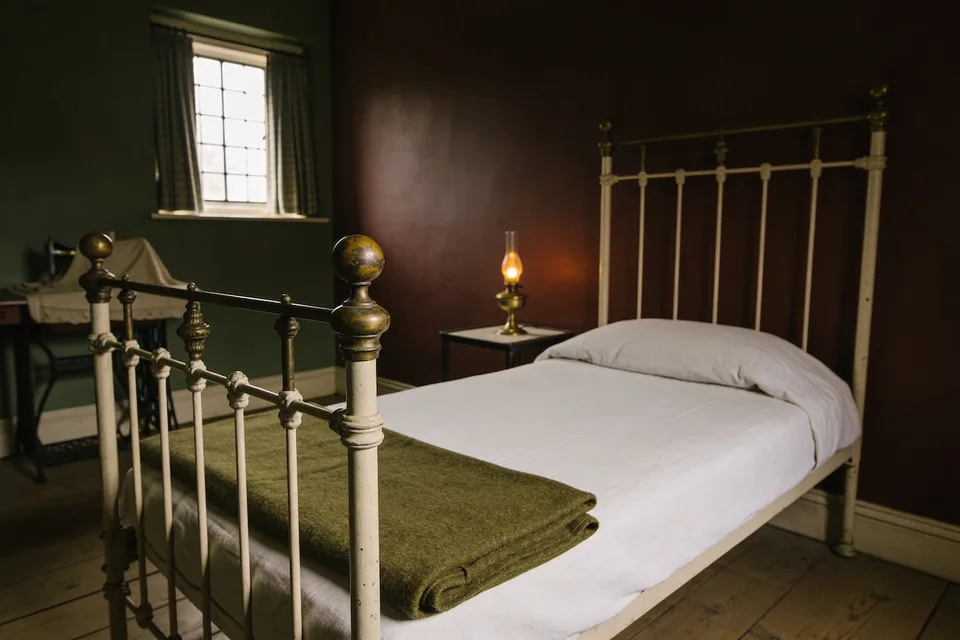
Most houses do not have a guest room. They have a room that is a sewing room, or an office, or where the drying rack lives, and twice a year it has to sleep somebody for four nights and then go back to what it was. Every guide written about this assumes a room standing empty and waiting, which is a lovely idea and almost nobody's house.
What makes a guest room cozy when it isn't really a guest room
A cozy guest room comes down to about five small kindnesses: a warm layer they can find in the dark, a lamp on the side they will actually reach for, water by the bed, one drawer and a couple of hangers cleared, and a window that opens. None of it is decorating. All of it is the difference between a comfortable four nights and a polite four nights.
The reason those five and not others is that a guest will not ask. They will lie there cold, or squint at their phone because they cannot find the lamp switch, or go to bed thirsty rather than open cupboards in somebody else's kitchen at midnight. Every one of those is a small failure of the room and every one is cheap to prevent. The decorating half, the part the photographs are about, fixes nothing that keeps anybody awake.
So the honest order is: make the room work first, and only then make it look like the accumulated, unfussy bedroom you would want to wake up in.
Start with the bed, and one wool layer they can find in the dark
Make the bed up warmer than you think it needs, and leave the extra layer folded at the foot where it is visible rather than in the cupboard. A guest who wakes cold at three will use a blanket lying on the bed. They will not get up and go looking through a stranger's airing cupboard for one.
Wool does the work here better than anything else, because it keeps warmth without weight and it handles the particular problem of a spare room, which is that the heating in it is usually either off or wrong. A folded wool blanket across the foot of the bed is also the one piece of styling in this whole piece that is genuinely worth doing, since it reads as hospitality from the doorway.
The other cold-weather kindness is a hot water bottle, which sounds old-fashioned until somebody arrives off a long drive in November. Left made up on the bed in a wool hot water bottle cover, it does not even need explaining.
And then the test nobody does: sleep in the bed yourself for one night before the season starts. One night finds the sagging edge, the pillow that is too high, the draught along the skirting and the streetlight coming through the curtain, and it finds all of them while there is still time.
The lamp goes on the side they will actually reach for
Put a lamp within reach of the pillow, on the side of the bed that is not against a wall, and check that it can be switched off lying down. A guest room with only an overhead light means every guest walks across a cold unfamiliar floor in the dark, and that one detail undoes an otherwise kind room.
If the bed has both sides free, two small lamps beat one bright one, and low warm bulbs beat anything cool and white. This is the same argument that makes a dark room work at all: light low and warm, in more than one place, is what keeps deep walls from going grim after sunset, and the longer case for it applies to a guest room exactly as it does to your own.
Leave the switch findable. A lamp with a fiddly touch base or a cord switch lost behind the table is, at two in the morning, the same as no lamp.
Water by the bed, and the things that stop them asking
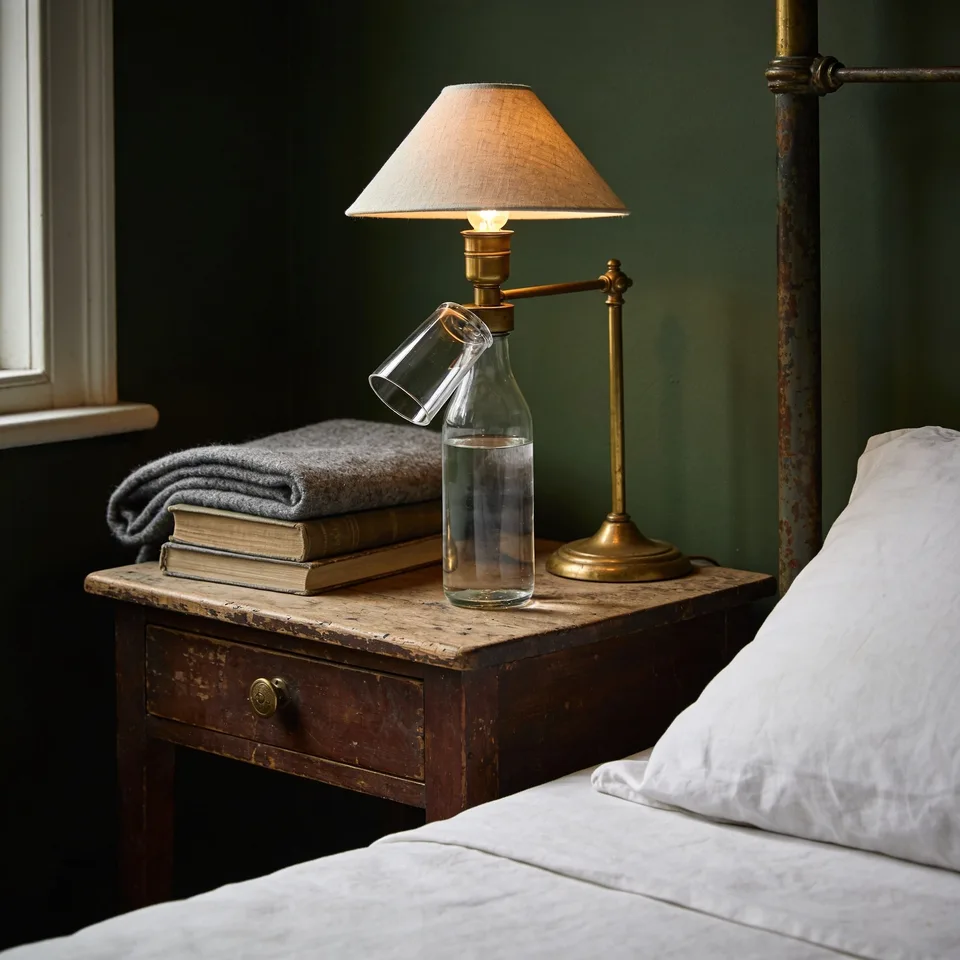
Leave water and a glass on the bedside table, and leave the wifi password written somewhere obvious in the room. Those two together prevent most of the small awkward questions a guest has to work up to asking, and both take about a minute the afternoon before.
A carafe with a tumbler turned over its neck is the tidy version, and it has the advantage of looking like it belongs on the table rather than like something that was fetched. A plain glass carafe and tumbler set lives there permanently and gets refilled the day before anyone comes, which is one less thing to remember on the day.
The rest of the short list is the same shape: a spare towel on the end of the bed rather than in the bathroom cupboard, a box of tissues, and a bin.
Empty one drawer and clear two hangers
Clear one drawer and two or three hangers, and move whatever is stored on the chair. A guest with nowhere to put clothes lives out of a suitcase on the floor for four nights, which is the single clearest signal that a room was not really made ready for them.
One drawer is genuinely enough for most visits, and it is achievable in a room that is doing another job the rest of the year. The hangers matter more than the drawer if anybody is coming for a wedding or an interview, and a few wooden clothes hangers left on an empty rail do more for that impression than any amount of arranging elsewhere.
Then the chair. In a spare room the chair is almost always holding something, and a chair holding something is not a place to put a bag. Clearing it takes thirty seconds and it is the difference between a room that has been tidied and a room that has been made ready.
The window, the door and the air in the room
Check that the window opens and that the curtain actually darkens the room. Spare-room windows get painted shut and spare-room curtains are usually whatever came off another window, and a guest will sleep badly in a stuffy bright room without ever mentioning either.
Lined curtains, or a blind behind a lighter curtain, fix the light. For the air, open the window for an hour on the day they arrive, especially if the room has been shut up since the last visit; a room that smells of cold storage is noticed immediately and is impossible to mention politely. And if the door does not lock, say so cheerfully when you show them in rather than letting them discover it at bedtime.
If there is a spare corner, a chair and a lamp in it turn a room somebody sleeps in into a room somebody can sit in, which matters on the third afternoon of a visit. The same thinking that makes a reading corner out of an awkward small space works here, and the guest room is often the easiest place in the house to do it.
The day-before list
If you do nothing else: strip and remake the bed, put the extra blanket where they can see it, fill the carafe, clear the drawer and the chair, open the window for an hour, and turn the lamp on before they come upstairs.
That is about forty minutes of work and it covers everything in this piece that a guest would notice. The sewing machine can stay in the corner under a cloth. Nobody has ever minded a guest room that was obviously something else during the week. What they mind, and remember, is being cold and not liking to say.
Common questions
How do you make a spare room feel like a guest room?
Take three things out and put five things in. Out: whatever is stored on the bed, on the chair and in one drawer. In: a warm layer they can find in the dark, a lamp on the side they will reach for, water and a glass, somewhere to hang two things, and a window that opens. The room can still be a sewing room the rest of the year. It only has to stop being one for four nights.
What should you put in a guest room?
A reading lamp they can turn off from the pillow, an extra blanket folded where it is visible, a glass and a carafe of water, two or three free hangers, one emptied drawer, a spare towel, and a note of the wifi password left somewhere obvious. Everything past that is decoration, and none of it fixes a cold bed or a lamp they cannot find at two in the morning.
How do you make a guest bed comfortable?
Sleep in it yourself for one night before anyone else does. That single test finds the sagging edge, the pillow that is too high, the draught along the floor and the streetlight through the thin curtain, and it finds them while you can still do something about it. Then add one more warm layer than you think is needed, because a guest will shiver all night rather than come and ask.