 Cottage at Home
Disclosure: some links below are affiliate links, and if you buy through one we may earn a small commission, at no extra cost to you.
Cottage kids room ideas: a room that grows up with them
A cottage kids room that lasts: choose the colour, the bed, the wool and the lamp once, for the teenager, and give the child one wall and one shelf to change.
In this guide
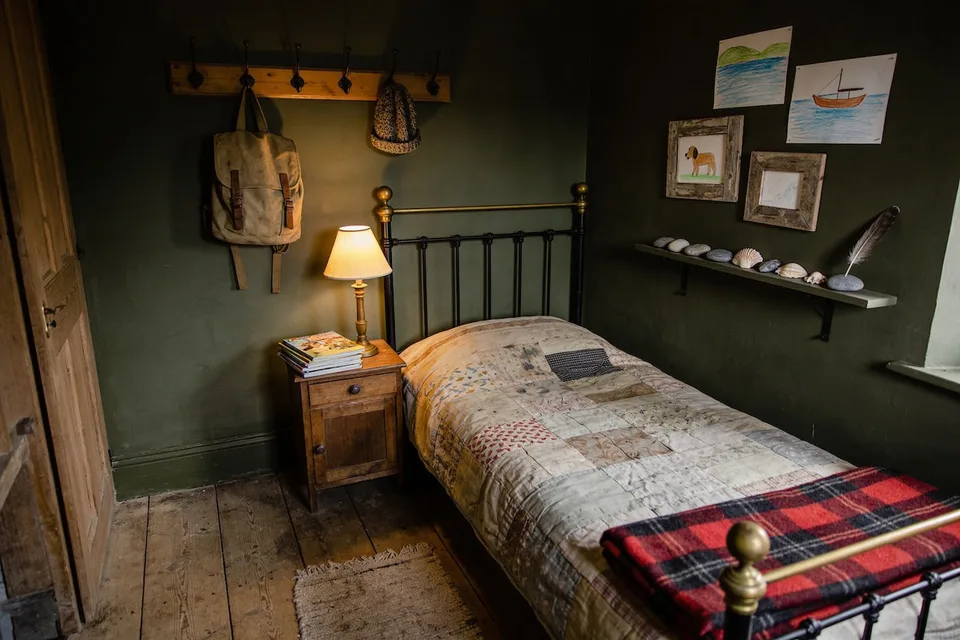
Stand in the doorway of your child's room and picture it in eight years. Most of what is on the walls now will have gone, and most of what it is painted will be something they want changed. A cottage kids room avoids that by choosing a few lasting things once and leaving one wall free to change. This page is about which things are which.
What stays from six to sixteen, and what doesn't
The wall colour, the bed, the blanket and the lamp stay. The pictures, the collections and the favourite colour of the year do not. In a cottage kids room the lasting things are chosen for the teenager and the changing things are left to the child, so the room grows up without being done over.
That split is what page after page of themed rooms misses. A room built around one age, all toadstools or all rockets, is finished the day it is done and dated a year later. A cottage room is never finished, which is the point. It looks like a room somebody lives in because the part that changes is theirs.
If you are starting from a room that is already themed, don't strip it. Take down one wall's worth of the theme, paint that wall, and see how the rest looks next to it.
Paint it a colour they will still like at fourteen
Choose a soft, deep colour that a teenager would keep: moss green, a dusty blue, warm stone, or a faded brick pink. Look at the sample under the bedside lamp at night, because that is when the room is used most. The bright, young colours belong on the things that change, not on the walls.
A deeper wall colour also does something useful in a child's room: it hides the scuffs and fingermarks that a pale one shows the same week. It makes the lamp light warmer at bedtime, and it makes whatever goes up on the wall stand out, which matters when what goes up is their own drawing. The moody cottage bedroom has more on colours that sleep well.
Paint the woodwork the same colour as the walls, or a shade darker, and the room looks settled from the start.
Choose the bed once, and give it a quilt that has been used
Buy one plain bed that will fit a teenager, iron or painted wood, and dress it with a quilt that has been washed a hundred times. A good plain bed lasts the whole of childhood, and an old quilt has the soft, faded colour that makes a room look like a cottage before anything else is in it.
A vintage twin-size quilt is the one thing worth looking for. It doesn't have to match anything, and a mended patch or a faded square is part of its look. Keep the character bedding for a pillowcase or two, where it can be swapped when the character goes out of favour.
The English cottage bedroom covers the iron bed and the borrowed quilt at more length.
The wool blanket that outlasts every phase
Keep one heavy wool blanket folded at the foot of the bed, in a plain colour or a simple plaid or stripe. It is the warmest layer on a cold night, it looks right at every age, and a child who has one tends to keep it. It is often the one thing from the room that goes with them when they leave.
Wool is also the easiest way to bring the lake or the woods into the room without making a theme of it. A red and black plaid camp blanket says cottage the way a painted canoe on the wall never quite does. A vintage plaid wool blanket has usually been softened by years of washing, and often costs less than a new one.
Give them one wall that is theirs to change
Pick one wall, usually the one they see from the bed, and let them fill it: their drawings, a poster, a map, postcards, the thing they made at school. The rest of the room stays calm, so this wall can be as busy as they like. When they outgrow it, it comes down and something new goes up.
A peg rail run along that wall at their shoulder height holds more than hooks do: a bag, a hat, a jacket, a string of their drawings clipped with pegs. A Shaker peg rail looks as though it has always been there. Put their best drawings in mismatched old frames, the way you would hang anything else you cared about, and they look like pictures rather than homework. Vintage wall decor has more on hanging a mixed wall a few pieces at a time.
One shelf for the collection
Give the stones, shells, feathers, figures and whatever comes next one shelf of their own, at a height they can reach, and leave the rest of the shelves for books. A collection kept together on one shelf looks like a collection. Spread across the room it looks like clutter, and it is harder for them to keep.
The shelf will change every year or two, and that is fine. The summer's rocks give way to a row of model cars, and those give way to records. It is the same idea as one object a shelf on a bookcase: the rest of the room can stay quiet because this shelf is allowed to be full.
Put the lamp where they read
Put a small lamp on the bedside table, on the side they read from, and use it instead of the ceiling light at bedtime. A pool of warm light by the bed is what makes a child's room feel settled and cosy at night, and it is the habit a reader keeps for life.
Let them choose the shade if they want a say in something. An old lamp base with a plain fabric shade will outlast three bedrooms. If there is a reading corner, a second lamp belongs there too, and the reading nook piece covers the chair, the lamp and the throw.
Which pictures come down, and what goes up
When a picture stops being theirs, take it down and put up one they have chosen. The pictures in a cottage kids room change more than anything else in it, and the ones that last are usually the ones they picked themselves: a map of a place they love, a picture of an animal, an old poster of somewhere the family goes.
Keep the ones that come down in a flat folder or a drawer rather than throwing them out. Some of them will matter again at twenty. If you are looking for a first picture that isn't a character, there are some old-style prints in our shop, and a lake, a lighthouse or a canoe tends to last longer on a child's wall than a cartoon does.
Start with the wall they see from the bed
This weekend, sit on the edge of their bed and look at the wall in front of you. Clear it, and let them put up three things they choose. Fold a wool blanket at the foot of the bed and switch on the lamp at bedtime. Then leave the rest of the room alone for a while and see what they add.
If the room at the lake has bunks rather than a bed of their own, the cottage bunkie is about that other kind of room.
Common questions
How do you make a kids room feel like a cottage?
Choose the lasting things the way you would for any cottage bedroom: a deep, soft wall colour, a plain iron or wooden bed, a quilt and a wool blanket, and a lamp by the bed. Then give the child one wall and one shelf that are theirs to fill and change as they grow.
What colour should a cottage kids room be?
A colour they will still like at fourteen: a soft moss green, a dusty blue, a warm stone or a faded brick pink. Pick it under the lamp at night, not in the afternoon. The bright, young colours belong on the one wall and the one shelf that are allowed to change.
How do you decorate a kids room so it lasts?
Split the room in two. The walls, the bed, the blanket and the lamp are chosen once, for the older child. Pictures, drawings and collections go on one wall and one shelf that change every year or two. When they outgrow a phase, you change the wall, not the room.