 Cottage at Home
Disclosure: some links below are affiliate links — buy through one and we may earn a small commission, at no extra cost to you.
Cottage bunkie: the guest room your guest walks to in the dark
A cottage bunkie is the guest room reached alone in the dark: a flashlight on its hook, water by the bed, wool findable without a light, a screen that shuts.
In this guide
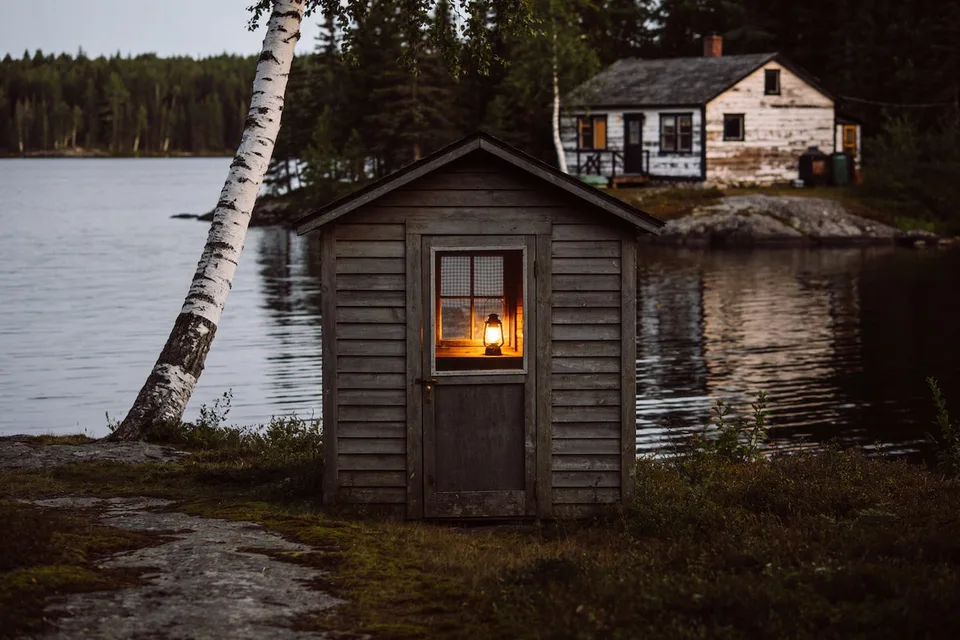
By ten the lake has gone black and the wind has dropped, and somebody has to cross the grass to bed. They have a flashlight if they thought to ask for one, a path they walked once in daylight, and a door they have never opened at night. Everything written about a bunkie is about building or buying one, and nobody writes about that walk.
What a cottage bunkie is, and why it is a different kind of guest room
A bunkie is a small one-room sleeping cabin standing apart from the cottage, usually a short walk across the grass, with a bed, a window with a screen and no plumbing. If you say lake house or camp rather than cottage, it is the guest cabin, the little building out back where the overflow of a long weekend sleeps.
There is a guest room inside the house too, and we have written about that one: it is the sewing room that has to sleep somebody four nights a year, and most of what makes it kind is five small things left where a guest can find them. The bunkie is the other guest room, the one across the grass, and the difference between the two is the walk. Inside the house a guest who wakes cold or thirsty can pad down the hall and find you. Out here they cannot, and they will not try. They will lie there until it gets light.
So the bunkie is furnished for a person on their own in the dark. That sounds like a small shift, and it changes almost every decision, starting with where the flashlight lives.
The flashlight on the hook by the door, and the light you leave on
Hang a flashlight on a hook inside the bunkie door at hand height, and keep a second one at the cottage door for the walk over. The one in the bunkie lives on that hook and nowhere else, because a flashlight in a drawer is no flashlight at two in the morning, and its batteries get changed on the May long weekend whether they need it or not.
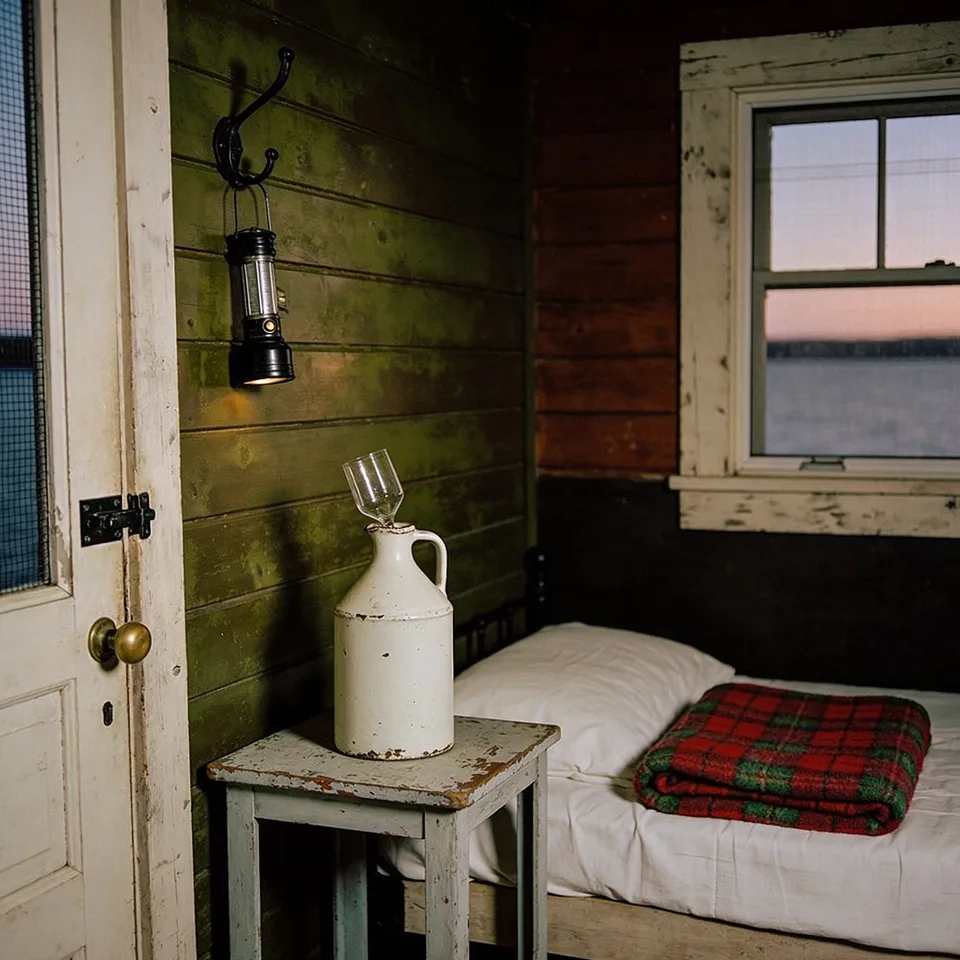
A pair of cast iron hooks inside the door does the rest of the job: flashlight on one, a sweater or the wet towel on the other. Screw them into the board wall at the height a hand reaches without looking. A headlamp is worth having as well; it leaves a hand free for the screen door, and it is the thing a guest never thinks to bring.
Then the walk back. Leave one light on at the cottage that can be seen from the bunkie bed: the porch light, or a lamp in the kitchen window if the porch light draws moths. A guest who wakes at three and needs the bathroom knows which way the house is before they are fully awake, and the way back is never a guess. If the path drops to a step, one solar stake light there is enough; a row of them lights the lawn and not the step.
Water, a glass, and a wool layer you can find without a light
Leave a jug of water and a glass on the table by the bed, and fold a wool blanket at the foot of the bed on top of the quilt, where a hand finds it in the dark. Those two things prevent the two commonest reasons a guest lies awake out here, and neither has to be pretty, though a chipped enamel jug is.
The water matters more in a bunkie than in the house because there is no tap. Fill the jug from the cottage kitchen the evening before and turn the glass over its neck, which keeps the moths and the one determined spider out overnight. A guest will drink from it without thinking, and will not walk across the grass for a glass of water however thirsty they are.
The blanket is a rule of the lake rather than a kindness. Even in August the cold comes up off the water in the last hour before light, and a bunkie has thin walls and no stove. A wool camp blanket folded across the foot of the bed, on top of the quilt rather than in a trunk, is found without a light and pulled up without anyone properly waking. Bring it into the cottage at the end of a damp week the same way the blankets come in from the screened room, and it lasts for decades.
A screen that actually shuts
Check that the screen door shuts on its own and latches, and check every window screen for a tear before the first guest arrives. A bunkie with a screen that gaps is a room with mosquitoes in it, and a guest lying awake listening to one is the failure the building was put up to prevent.
The door wants a spring or a closer, so it shuts behind a person whose hands are full, and a hook and eye at hand height inside so it stays shut in a wind. A strip of felt on the frame stops it slamming, which matters at midnight with the cottage windows open. Run a palm over each window screen in May: a tear you can feel is one a mosquito will find in June, and a five-minute patch in daylight is a hopeless one after dark.
And no candles. A pine-board building thirty metres from the hose, with a guest asleep in it, is no place for a flame, and a battery lantern on the table does the same job with none of the worry. Keep it within reach of the pillow, so nobody has to cross a strange floor to turn it off.
Ten by twelve that sleeps four without turning into a bunkhouse
A ten-by-twelve bunkie sleeps four with a double bed along one long wall, a single along the other with a trundle underneath, and about two feet of floor between them. The trundle comes out at night and goes back under in the morning, so by day the room shows two beds and a floor, which is most of what keeps it from feeling like a bunkhouse.
The measurements work, just. A double is fifty-four inches wide and a single thirty-nine, which leaves twenty-seven inches of aisle on a ten-foot wall, enough to walk down and enough for the trundle to roll out into. Heads go to the back wall, under the window if there is one, and the feet face the door, which leaves the width of the room at the door end for the hooks, a small table and one chair.
Bunks are the other answer, and they are why so many bunkies read as a barracks. If the ridge gives you the height, a single bunk over the single bed sleeps a fifth. But a room of stacked beds is a room nobody sits in during the day, and the bunkie gets used in the afternoon more than people expect, by whoever wants to read while the cottage is loud.
The rest is the same as inside the house: nothing stored under the beds but the trundle, one hook per person, a shelf rather than a dresser, and a single chair by the window. The blankets do not have to match, and nothing else out here does either.
The walk you take before they do
Some evening before the first guest sleeps out there, walk over after dark yourself, without the flashlight. You will find out which step is invisible, whether the porch light reaches the door, where the screen door catches, and whether a hand can find the hook, the jug and the blanket without a light. All of it can be fixed the next morning.
It is the same test as sleeping one night in the spare room inside the house, and it takes ten minutes instead of a night. Start with the hook by the door, and hang the flashlight on it tonight.
Common questions
What is a bunkie at a cottage?
A bunkie is a small one-room sleeping cabin standing apart from the cottage, usually a short walk across the grass, with a bed, a window with a screen and no plumbing. If you say lake house or camp rather than cottage, it is the guest cabin, the little building out back where the overflow of a long weekend sleeps. It is a different kind of guest room from the one inside the house, because a guest who wakes cold or thirsty out there cannot pad down the hall and find you. They will lie there until it gets light, so the bunkie is furnished for a person on their own in the dark.
What should you leave in a bunkie for guests?
A flashlight on a hook inside the door at hand height, with a second flashlight at the cottage door for the walk over. A jug of water and a glass on the table by the bed, filled from the cottage kitchen, because there is no tap. A wool blanket folded at the foot of the bed on top of the quilt, where a hand finds it in the dark, since even in August the cold comes up off the water in the last hour before light. A battery lantern within reach of the pillow rather than a candle. And one light left on at the cottage that can be seen from the bunkie bed, so the way back is never a guess.
How do you sleep four in a ten-by-twelve bunkie?
A double bed along one long wall, a single along the other with a trundle underneath, and about two feet of floor between them: a double is fifty-four inches wide and a single thirty-nine, which leaves twenty-seven inches of aisle on a ten-foot wall. The trundle comes out at night and goes back under in the morning, so by day the room shows two beds and a floor, which is most of what keeps it from feeling like a bunkhouse. Bunks sleep a fifth if the ridge gives you the height, but a room of stacked beds is a room nobody sits in during the day.