 Cottage at Home
Disclosure: some links below are affiliate links — buy through one and we may earn a small commission, at no extra cost to you.
Vintage home decor ideas: how an old thing earns its place
Vintage home decor ideas from a house that actually lives with them — where the old things come from, how to judge one in the hand, and why a find starts work the day it arrives.
In this guide
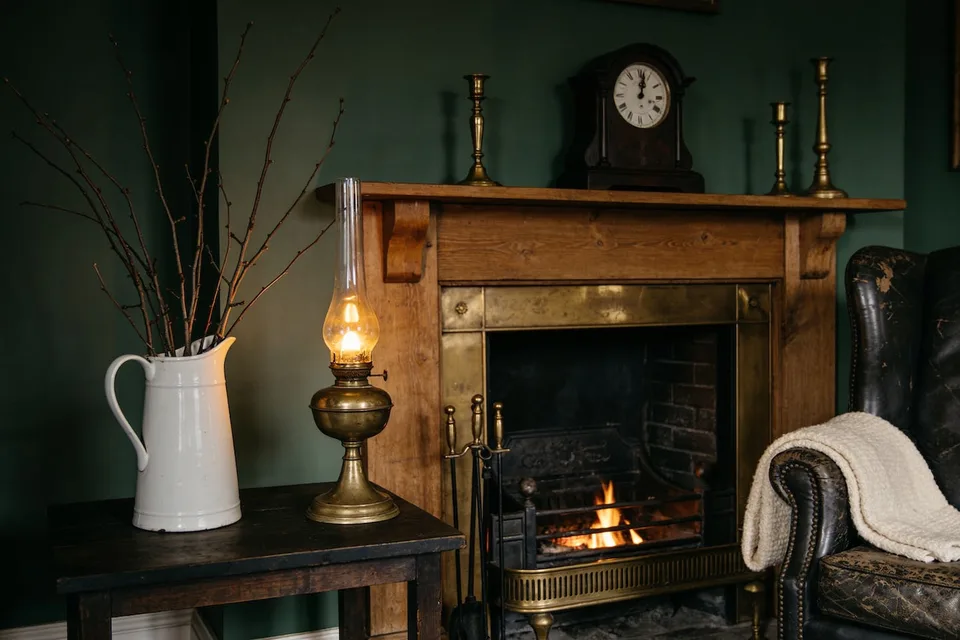
The pitcher came home from the estate sale on Saturday and was working by Sunday supper. White ironstone, the glaze crazed into a map of fine brown rivers, a chip on the spout rubbed smooth by sixty years of other kitchens — and cut branches standing in it now on the dark oak table, where the brass lamp lands its light first. Nobody here would call that decorating. The pitcher was hired: found for a few dollars, judged in the hand, given its work before its first night under this roof. That it holds the whole corner together in the evening light is the sort of thing a working object does off the clock.
Use first, story second
A find is not asked where it came from first; it is asked what it can do. The pitcher pours. The bowl holds. The lamp lights. The blanket warms the actual evening it is draped through. Only after the job is settled does the story get its hour — and the story is real value, worth having and worth telling, the one thing no factory has ever manufactured. But it rides second. An old object hired for its story alone has nothing to do all day, and idleness shows on a shelf the way it shows anywhere else. Most of what is written about decorating with vintage finds treats the old thing as a prop — stand it here, angle it so, let it say collected on the household's behalf. This house runs the hiring the other way around.
That is the whole method, and the rest of this page is only the method walked through its stations: where the finds come from, how one is judged, what happens the day it arrives, and what gets turned away at the door. The lists of thrifted home decor ideas mostly run object-first — buy this jar, this crate, this ladder. The house runs job-first, and the difference is the difference between a room that settles and a room that poses. A room of working things sits down with you. A room of posed things is waiting for a photograph.
Where the old things come from
Three roads bring nearly everything, and none of them is a store with a vintage sign over the door.
The estate sale is the deep well. A whole household's working life comes up for sale by the room, and everything in it has already proved itself — the boards met knives, the pans met heat, the blankets met winters. Prices fall as the day runs on, and the last hour belongs to the patient: by then the dealers have taken the silver and gone, and what remains is the working layer, priced to leave. That is the hour this house shops. It is also the gentlest lesson in the whole trade, because a house being emptied says plainly what a house being filled forgets — that all of it, every jug and firedog, was bought to be of use.
The thrift shop is the weekly well, shallower but always refilling. Its ordinary shelves are read by material rather than category — scan for stoneware, old wool, darkened brass, and the good woods, and let the categories sort themselves out later. The seasonal version of that read has its own page, because by the time the light drops autumn is already on the thrift shelf, priced as if it belonged to no season at all.
And the family attic is the oldest road of the three. Things come down it boxed and labeled too good to use, which is how good things get lost for a generation — the quilt wrapped against the moths it outlasted, the clock stopped only because nobody wound it. What arrives by this road arrives half-employed already, its wear in the family's own hand. A steady share of the house came wrapped for birthdays besides, and the case for giving old things — why the estate-sale find outgives the boxed new one — is made properly on its own page.
How to judge one in the hand
Every find, whatever road it came by, sits the same short examination. It happens in the hand, at the table or the last-hour tables, and it asks three questions in order.
- What will it do here? The job is named before the wallet opens, and named honestly. It can be a small job — holding the five o'clock light on a windowsill is employment; so is standing water under branches — but it must exist, and it must be a job this house actually has open. A find bought without work waiting is not a find. It is clutter with a head start.
- Is the wear honest? Wear and damage are different words, and the price of getting them confused is the whole price. Wear records use: the handle worn pale where hands landed, the bowl scraped silvery inside, crazing gone tea-brown across a glaze. All of that is the object's employment history, and it is bought gladly. Damage ends use: the crack a vessel weeps through, the seam that has let go, the corner sprung past holding. On anything meant to serve food, the inside surfaces must still be sound — the rest is biography.
- Does the price answer the job? An old thing is priced here against the working equivalent bought new, not against its decades — the decades are not a line item. Solid wood at less than the flat-pack version, wool at less than fleece, is the ordinary arithmetic of the last hour. When a price has been written for the story instead of the work, the story is being sold to somebody, and it need not be this house.
The pitcher on the table sat exactly that examination. A white ironstone pitcher is nearly the perfect first find, because the jobs queue up for it — water to the table, branches in October, gravy at the holiday, the counter's wooden spoons the rest of the year — and because ironstone was made heavy for working kitchens and mostly survived them. Crazing is years and nothing else; a chip on the spout is a working scar; only a crack that goes through the body retires it. Judged against what a new jug of no particular character costs, the hundred-year-old one, more often than not, is the bargain.
It starts work the day it arrives
There is no probation shelf in this house — no season of standing pretty while the household decides what a thing is for. That question was answered before the money changed hands, so the find clocks in the day it clocks through the door. The quilt goes onto the bed it was bought for, the same evening. The crock takes the umbrellas or the branches. The tumblers go into the cupboard the family actually opens, and get used until using them is no occasion at all.
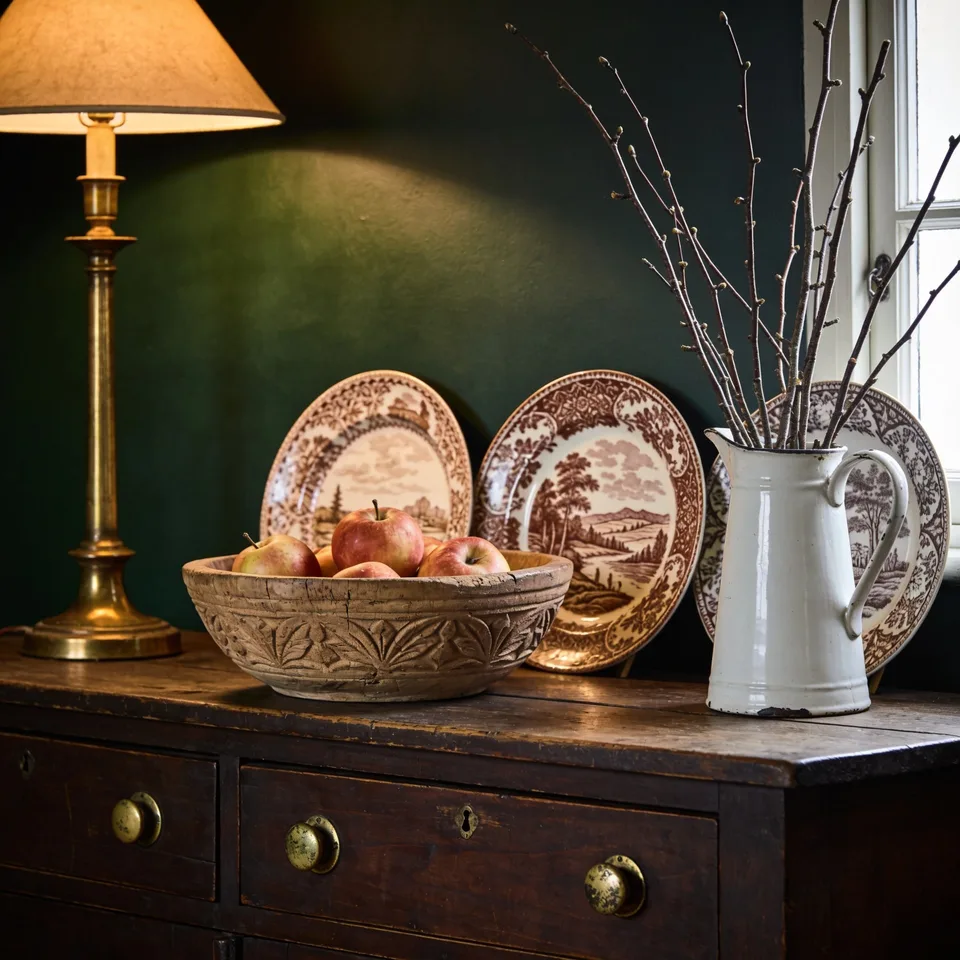
The wooden dough bowl is the plainest case for the rule. Kept on a shelf it is sculpture, and slightly sorry about it; set on the table with the week's apples in it, or drafted for the bread dough it was carved for, it is the hardest-working surface in the room by Thursday. Old wood wants handling the way old brass wants lamplight — the use is not wearing it out. The use is what it is made of.
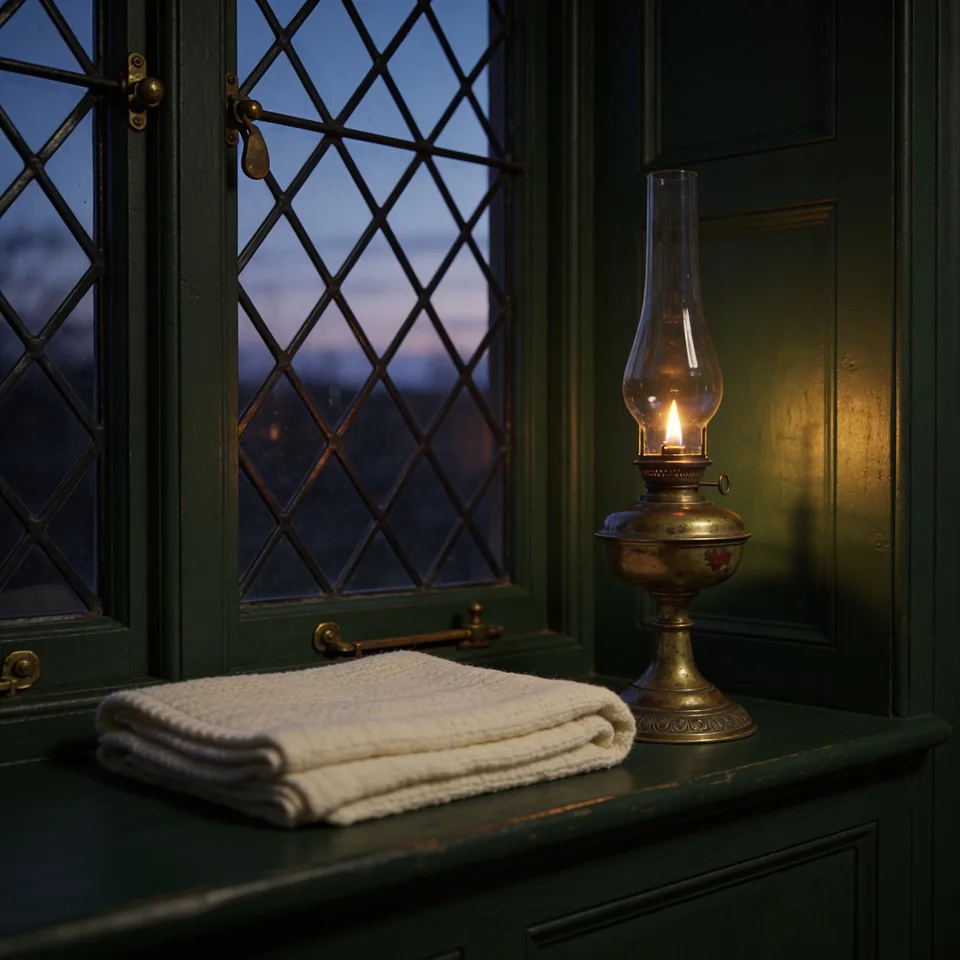
The same evening-of-arrival rule holds even for the things a softer house would call decorative. A brass oil lamp comes home, gets its wick trimmed and its oil the same day, and is lit that night — because a lamp that has never been lit in its new house is a figurine, and this house keeps no figurines. It lives on the sill afterward, kept filled against the winter night the power fails, working even while it waits. Nowhere does the day-one rule run harder than the kitchen, where the vintage layer — the enamelware, the boards, the worn linens — earns its shelf room three times a day; that room's whole case is made on its own page.
One surface in the house is excused from all of this, and it is the walls. A picture's employment is being worth looking at, so the wall is the single place a find may stand idle and still be working — and even there the house is in no hurry, because the walls fill by their own slower law, one nail at a time, over years. That errand has its own page too. Everything below the picture rail answers to this one.
The once-a-year things
Use keeps a calendar as well as hours, and the house employs both kinds. The big platter works one day a year, carrying the bird to the once-a-year table, and spends the other three hundred and sixty-four in the sideboard — which is not the probation shelf, because the appointment is real and it is kept. The amber glass waits for October's low sun; the heavy plaid waits for the first cold Saturday. A cupboard holding things between engagements is a working cupboard. The difference between storage and staging is simply whether the day ever comes.
What this house refuses
The method is mostly a way of saying yes, but it turns three things away at the door, by name.
It refuses the staged corner. The ladder leaned against the wall to hold blankets no ladder is needed for; the suitcases stacked into a table nobody will ever open; the typewriter retired to a desk it does not type at — objects hired to pose as somebody's history. Stagecraft photographs well and lives badly, because a posed thing has nothing to do tomorrow, and a room can tell. If the ladder ever climbs and the cases ever travel, they are welcome. Props are not.
It refuses new goods in vintage costume. The factory can chip the enamel before it ships now, rust the lantern before the box is taped, print vintage on a swing tag with the ink still wet. What it cannot do is the work — the sixty years of pouring and scrubbing and carrying that wear stands as the record of. Wear without work is a forged reference, and the house checks references. The true article usually stands a shelf away at the thrift shop, cheaper, with its history legitimate.
And it refuses the collection bought all at once. A shelf of jugs assembled in one afternoon, complete and evenly matched, is a costume a cupboard wears; the same shelf gathered one jug at a time over years has gaps and errors and one piece nobody can explain, which is what an honest collection looks like. Accumulation is not for sale in a single receipt — the years are the ingredient, and there is no supplier. (A box lot of something useful, priced to clear, is a different matter — that is stock against the years, not a collection pretending they already passed.)
The one exception is paper
One material gets a dispensation, because time refuses it: paper. The old prints die of sunlight in frames that outlive them by a century, which is why the honest way to old pictures is a genuinely old frame around a fresh-printed copy of a genuinely old plate — maintenance in the old register, not newness smuggled in. The case for the printed page — the botanicals, the survey engravings, the foxed tones — is made at length on its own page; the free prints arrive by email in the same low key, the winter plates carry December when it comes, and our shop keeps the drawn sets made for these same rooms. The room that proves the dispensation is the bath, which ripples a printed sheet by spring and costs only the paper to put right. Paper is the one find the printer is allowed to supply. Everything with weight in the hand still has to be found.
The stranded thing first
Not a purchase tonight — a rescue. Somewhere in the house already stands the one old thing that only stands: the pitcher that has never poured here, the bowl kept empty for its own good, the lamp that has never once been lit under this roof. Walk the rooms after supper and find it, and give it back its work before bed — water and branches, the week's apples, a trimmed wick and a match. By morning it will have stopped being decor and started being the house. The next find can be hunted properly, one Saturday, one job in mind — but the method starts free, tonight, with the hiring of something already home.
Common questions
How do you judge a vintage piece in the hand?
Weight, joins and wear. Check that it still does its job, that repairs are honest rather than hidden, and that the wear sits where hands would have put it. A piece worn evenly all over has usually been distressed rather than used.
Where do the old things actually come from?
Estate sales, church sales, the back of charity shops, and the family cupboard nobody has emptied. Marketplaces price for the look; these price for the object, which is why the same piece costs a fraction.
Should a vintage find be kept for display?
It starts work the day it arrives. A thing used is a thing that keeps its place in a house, and one kept purely for its story tends to become clutter with a good excuse.