 Cottage at Home
Disclosure: some links below are affiliate links — buy through one and we may earn a small commission, at no extra cost to you.
Gifts for the one who keeps a cottage heart: things that age in the right direction
A gift guide for the keeper of a cottage home — wool, iron, linen, an old crock, printable walls — argued from what ages well and will be kept.
In this guide
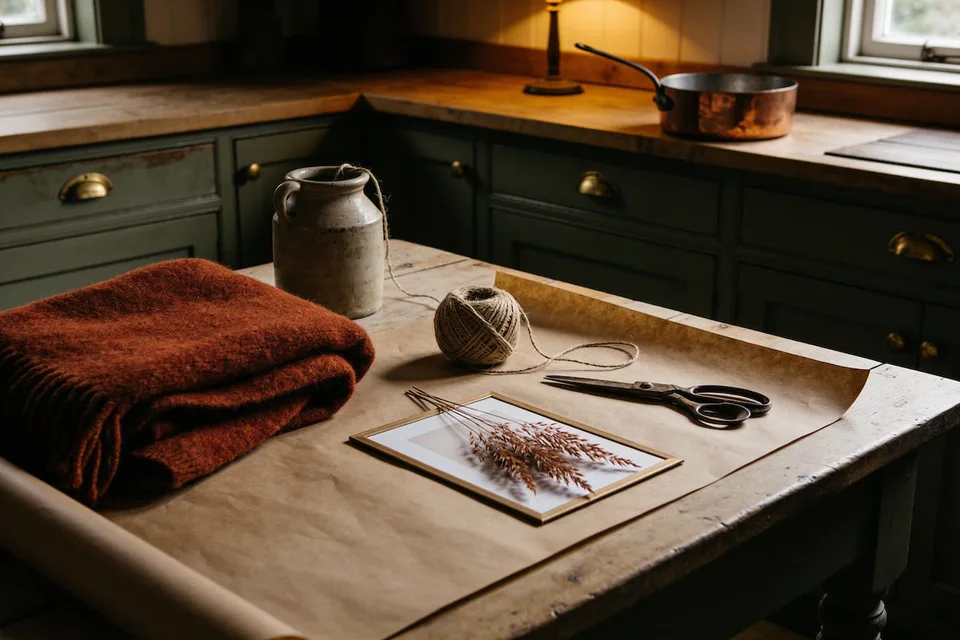
The blanket over the chair arm came into this room eleven Decembers ago, and the lamp beside it the year after that. The crock on the dresser was a wedding present two households back; the skillet on the stove arrived already seasoned by somebody else's suppers. Every one of them was a gift once. Not one of them has ever been put away.
What makes a gift a kept thing
That room is the whole brief. Most gifts are at their best in the box — newest in the first minute, brightest before the first use — and everything after the ribbon is subtraction. The materials a kept home runs on work the other way around. Wool thickens and softens with washing; iron seasons; brass goes soft-edged with handling; linen turns kinder every year it is used; wood takes its marks as a record rather than a ruin. A gift made from them is at its worst in the wrapping paper. It is not finished when it is opened; it is begun.
So the test, standing in any shop with any object in hand, is not how it will look on the table Christmas morning but what it will be in its tenth year — and three kinds of thing pass. Things that age in the right direction, which is most of what follows here. Things that arrive already storied: the thrift shelf carries autumn better than the catalog does, and it carries gifts the same way — an estate-sale crock has sixty years in it before the ribbon ever goes on, and in this kind of house that is not a lesser class of present but the local nobility. And things made plainly and heavily enough to be handed on, the purchases with the next household already implied in them.
None of this asks for much money. It asks for the right shops — and half of them are not shops.
For her: wool, a lamp, linen, and one old crock
For the woman who keeps a home like this, the gifts that land are working objects, chosen the way she chooses things — by material, by use, by what they will turn into. Four rarely miss.
A wool blanket, in a serious weight. Real wool holds lamplight better than cotton ever will, warms at half the thickness, and takes a decade of winters without complaint; if a moth ever finds it, a visible darn joins the record instead of spoiling it. The weight is the sincerity — a proper blanket announces itself in the hands before the paper is fully off — and in a deep solid or an old quiet plaid it will spend every October to April over the arm of whichever chair she reads in. That is the entire career a gift can hope for.
A small lamp. Not the overhead kind — a lamp for the end of a counter, the edge of a desk, the deep sill: warm bulb, low shade, a base in brass or turned wood, the sort that makes a pool rather than a flood. A low lamp is permission for the evening; it is what lets a room go on being a room after the work in it ends, and a house can absorb more of them than seems reasonable. Put the bulb in the box. A lamp that lights the same night it is opened is a finished gift; one that waits on an errand is a chore with a bow on it.
Linen, wherever her days would actually use it — pillowcases, a robe, an apron with one deep pocket. Flax is the fiber that ages in the right direction: softer and thirstier with every hot wash, for years, so the oldest piece in the cupboard is reliably the best one. A linen gift is a promise that matures. It is at its least impressive on the day it is given, and never again after.
And one old crock — salt-glazed stoneware, heavy enough to stand where it is put, wearing at most one politely rounded chip. A crock is the rare gift that assigns itself a job within the week: wooden spoons, dried stems from the garden's last cutting, the twine and the scissors, whatever the nearest counter turns out to have been missing. Old ones from long-closed potteries surface at nearly every estate sale for less than the new imitations cost, and they arrive with their years included.
Nothing on that list is a token, and that is the thread that ties it. Each one goes straight to work.
The kitchen list, read as a registry
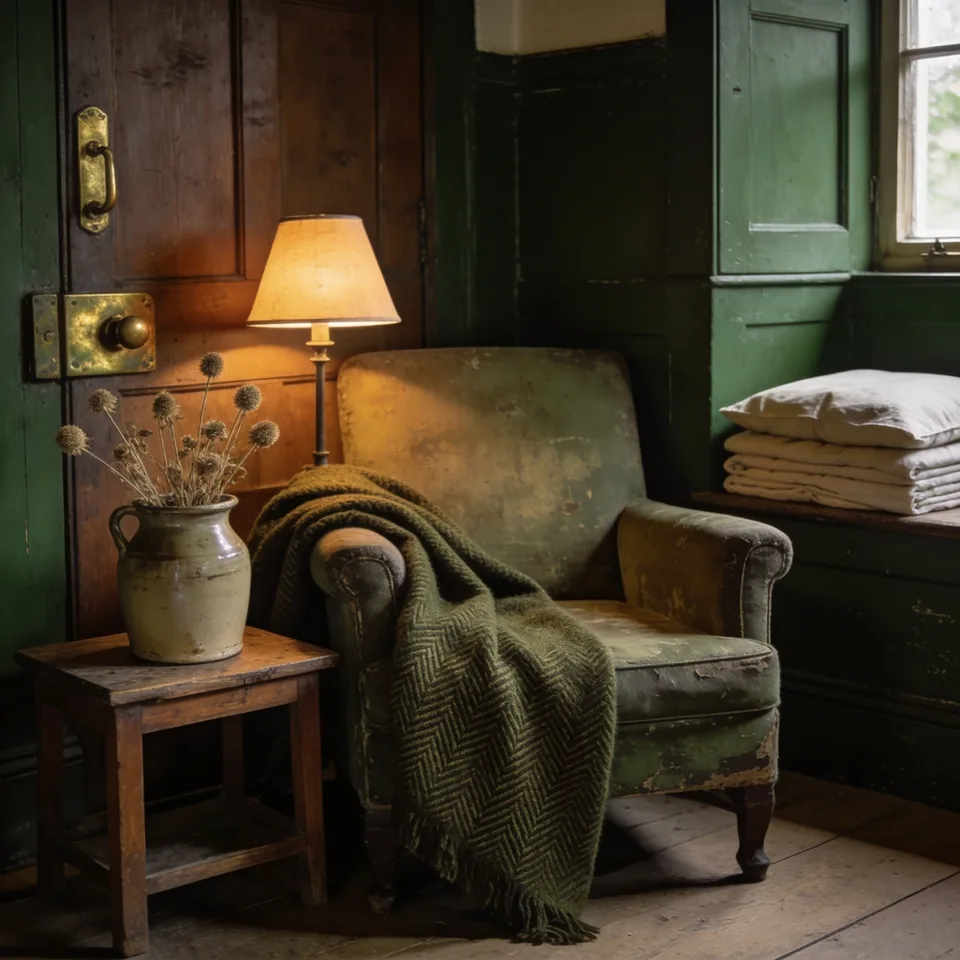
For the kitchen there is no need to guess, because the arguing is already done: what a cottage kitchen actually needs — iron, one good Dutch oven, copper where it counts, wood, linen, stoneware, a willow basket, a low lamp of its own — is a gift registry read sideways. Every entry on it earned its place from material and wear rather than taste, which is what makes it safe to give from: anything on the list her kitchen lacks will be used, because the list is made of use.
Two entries were practically written for giving. The enameled Dutch oven, because it is the inheritable purchase — bought once, heavy, cream or bottle green, cooked in for a lifetime and then passed along entire; the rare present with the next generation already in it. And copper, because a gift is the standing license for the one small extravagance: the whole point of giving is to hand someone the thing she will not buy herself, and a tin-lined copper saucepan of about two quarts — the pan that answers the flame the moment it changes — is exactly, famously that thing. Buying old, look to the inside before the shine: the tin lining should read gray and continuous, and a dusky outside is patina, not neglect.
The smaller entries give well in numbers. Linen towels, more of them than seems sensible, because they take the kitchen's daily beating and improve under it. Wooden spoons in beech or maple, which cost little, outlast nearly everything, and wear flat to their cook's hand like boot heels. And the kitchen is the room where giving old works best of all — things that have already lived, a dished cutting board, an enamel pitcher with one chip on its lip, a kettle gone quietly dark, carry their stories in with them, and the buying rules fit in one hand: iron wants a smooth cooking face, enamel a sound inside floor, wood a smell of nothing at all.
Under $25, and given the same evening
Below twenty-five dollars most shops sell gestures — the scented, the slogan-printed, the boxed set of nothing in particular. The honest exceptions are small and material: beeswax tapers, which burn slower than paraffin and smell faintly of the hive; one genuinely good linen towel, which outlives a drawerful of novelty ones; a ball of proper jute twine, a gift only a keeper of things would recognize as one. And then there is paper, where small money goes further than anywhere else in the house.
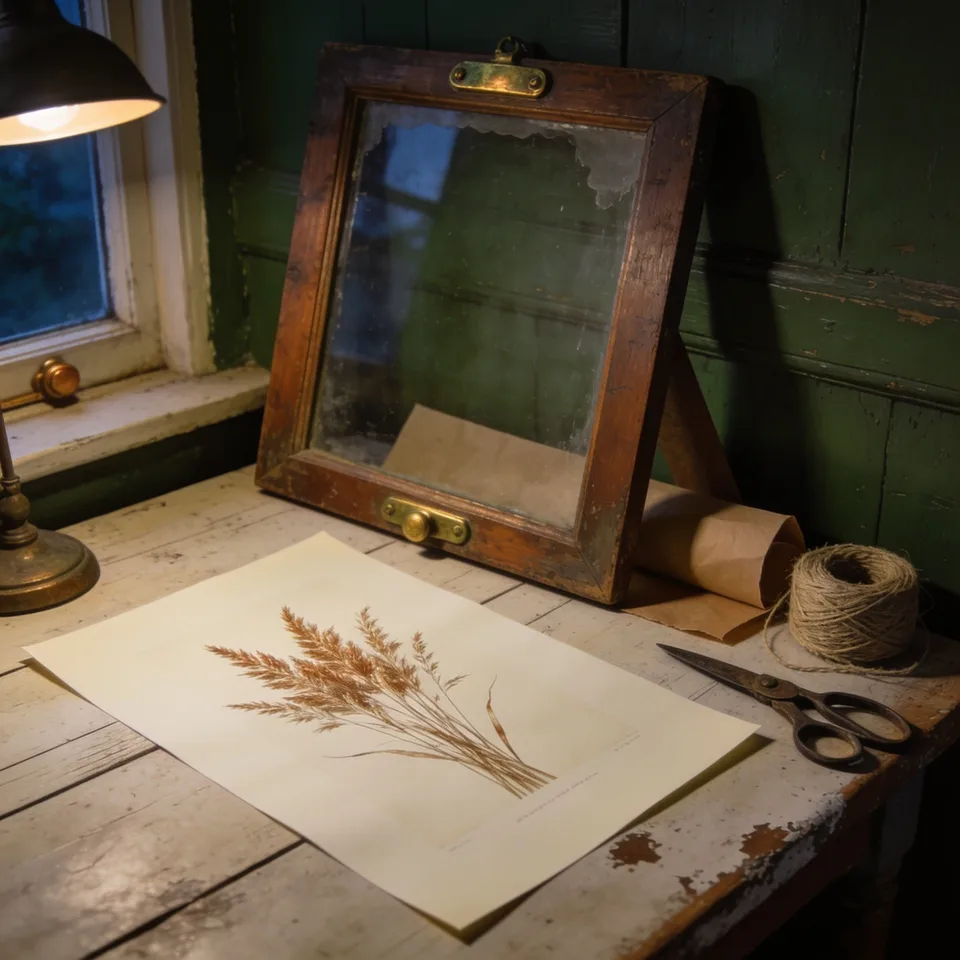
A printed page is the one gift with nothing to wait on. No shipping, no cutoff: chosen, printed, and framed between supper and bedtime, which makes it the standing answer to the gift remembered late — and a far better gift than that arithmetic suggests. The craft is already written down in the case for vintage printable wall art: a plate from a real old book, printed whole on heavy cream paper, near the size the book gave it, set in a thrifted frame that had a life before this one. An 1870s botanical of the herb her kitchen actually cooks with — the sage, the thyme, the bay — is a gift argued from use, the same argument as the skillet, carried up the wall.
One rule governs the whole category: never give the file. A link in a message is a favor; the framed thing is a gift. Print it, mat it a shade warmer than white, set it behind washed glass in old wood, and wrap it — the result has weight in the hands and a wall in mind, and the arithmetic stays quietly under the line: a few dollars for the frame, pennies for the sheet.
For the kitchen wall ready-drawn, a set of six kitchen studies — the copper stock pot, the garlic plait, a brass balance weighing two quinces — is CA$19, etched lines under a soft wash on an aged cream ground, sized to fit whatever frames the thrift shelf offers. Frame two for the giving, and the other four are hers to hang as the year turns.
The gift that costs nothing but the doing
At the far end of the arithmetic sits zero, and it is not a compromise. The free cottage prints — six botanical prints from these rooms, free the way holly from the hedge is free — exist for exactly this: the no-cost way to give something real. Print one on the heaviest cream sheet the paper aisle offers, find it a frame on the thrift shelf — old oak, worn gilt, a few dollars for better wood than the frame aisle sells at any price — and give the finished object. They hang in the same rooms as the sets in our own shop, and a visitor cannot tell the prices apart, which is rather the point.
What a free gift asks for instead is the hour, and the hour is visible in the result: which of the six suits her hall, which frame earned its washing, the mat cut generous the way the old books cut them. Handed over, it reads as what it is — made, not bought. In this kind of house, made-not-bought has never been the economy version of giving. It is the older version, and the better-remembered one.
One line on the tag
Whatever the gift turns out to be — the blanket, the saucepan, the crock with its sixty years, the framed plate still faintly warm from the printer — do the one thing no shop can, and write where it came from on the tag. Found at a farmhouse estate sale in October. Printed in this kitchen on a Tuesday evening. Chosen because the old one finally wore through. One line is enough. A thing that arrives with its story attached is already halfway to being kept — and kept, as the chair arm and the dresser have been quietly demonstrating for years, is the only thing this kind of home ever asks of a gift.
Common questions
What do you get someone who loves cottage style?
Working objects that go straight to work, chosen by material and use rather than novelty. Four rarely miss: a wool blanket in a serious weight, since real wool holds lamplight better than cotton and takes a decade of winters without complaint; a small lamp for the end of a counter or a deep sill, with the bulb already in the box; linen wherever the days would actually use it, because flax washes softer and thirstier every year; and one old salt-glazed crock, heavy enough to stand where it is put, which assigns itself a job within the week. The test for anything else is not how it will look on the table Christmas morning but what it will be in its tenth year.
What are good gifts under $25 for a cottage home?
Small and material beats scented and slogan-printed. The honest ones under twenty-five dollars: beeswax tapers, which burn slower than paraffin and smell faintly of the hive; one genuinely good linen towel, which outlives a drawerful of novelty ones; a ball of proper jute twine, a gift only a keeper of things would recognize as one. And then paper, where small money goes further than anywhere else in the house — a plate from a real old book, printed whole on heavy cream paper and set in a thrifted frame that had a life before this one, can be chosen, printed, and framed between supper and bedtime.
Can you give printable wall art as a gift?
Yes, with one rule: never give the file. A link in a message is a favor; the framed thing is a gift. Print the page on heavy cream paper, mat it a shade warmer than white, set it behind washed glass in old thrifted wood, and wrap it — the result has weight in the hands and a wall in mind, and the arithmetic stays quietly under the line, a few dollars for the frame and pennies for the sheet. A printed page is also the one gift with nothing to wait on — no shipping, no cutoff — which makes it the standing answer to the gift remembered late, and a far better gift than that arithmetic suggests.