 Cottage at Home
Disclosure: some links below are affiliate links, and if you buy through one we may earn a small commission, at no extra cost to you.
Cottage sunroom ideas: how the glass room is lived in all year
A cottage sunroom does a different job each month: coffee in March sun, the evening room in August, plants in October, a cool room in January.
In this guide
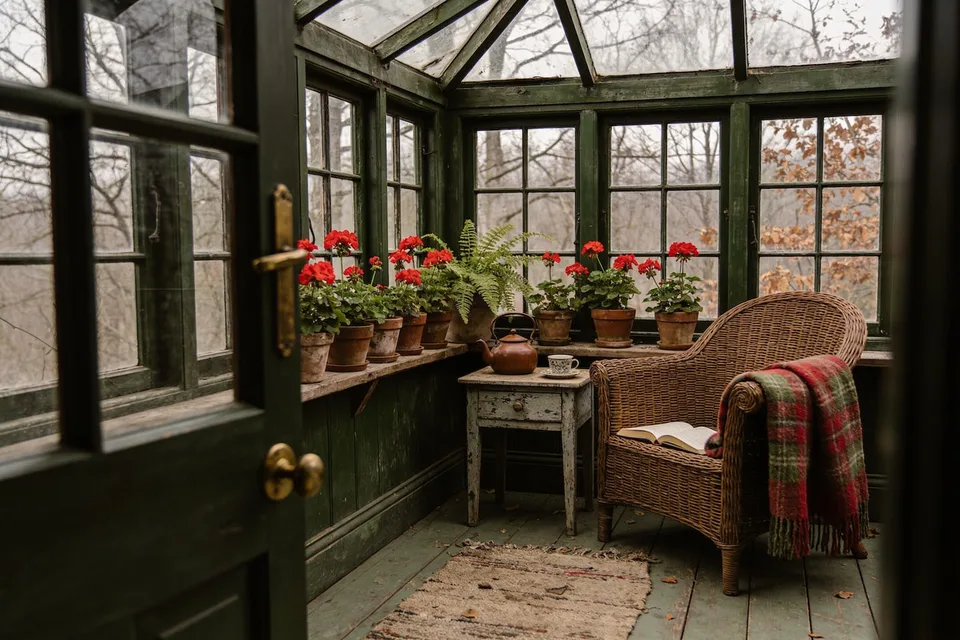
On the first bright morning in March there is still snow against the glass, and the sunroom is the only room in the house you want your coffee in. By July nobody goes in there before five. The room itself hardly changes across the year. What it is for changes every month, and that is what this page is about.
What a cottage sunroom is, and how it differs from the screened room at the lake
A cottage sunroom is a small room with glass on two or three sides, usually at the back or side of the house, and often a porch somebody glassed in years ago. It is the one room in a house whose job changes with the month, so it is furnished for the whole year rather than for one season.
At the lake, the room with screens instead of glass is a different room. The Muskoka room is open to the air, closed up in the fall and empty half the year. A sunroom keeps the weather out, so it gets used in March and November too, and that is what makes it worth furnishing properly.
In an English cottage the same idea is the garden room or the lean-to at the back, full of pots and one chair nobody else sits in. Here it is more often the sunporch: the front or back porch of an older house in town, glassed in to get a few more weeks out of it, and then used all year.
March: the first room in the house to feel the sun
In March the sunroom is the warmest room in the house for an hour or two in the morning, and the place for breakfast or coffee while the snow is still on the ground. Put one chair where the morning sun lands and a small table beside it, and leave everything else as it was over the winter.
Find out which corner the sun reaches first. Sit there for a week of mornings before you move anything. It is often not where the chair was put when the room was first furnished, and moving the chair a couple of feet is most of what spring asks of this room.
A cup, a book or the paper, and a blanket over the arm of the chair for the days the sun goes in. That is the whole room in March.
Summer: breakfast in it, and why nobody sits there at two o'clock
In summer a sunroom is for mornings and evenings. By early afternoon the glass makes it the warmest room in the house, so most households use it for breakfast, leave it alone through the middle of the day and come back after supper. Plan the room for those two times, not for noon.
Open every window that opens, first thing. If the room has blinds or curtains, draw them on the side that gets the afternoon. A room kept for mornings needs only a small table two people can eat at, a chair each, and somewhere to put the plates down.
This is the season when a sunroom gets filled with patio furniture. Try not to. It is still a room in the house, and a chair carried in from the sitting room looks more at home than anything sold for a deck. One old wicker chair is the exception: it is light enough to move with the sun, and on its own it looks as if it came from an aunt's porch. A matching set of four looks like a showroom.
August evenings: the lamp, the blanket, and a room with no mosquitoes in it
By August the sunroom becomes the evening room. The glass keeps the mosquitoes out while the light goes, and a lamp and a wool blanket make it the place to sit after supper. Put a small lamp on a table by the chair, low down, and leave the ceiling light off.
Once the sun is down, the glass turns dark and gives the room back to you like a mirror. A ceiling light makes that worse: you see yourself from every side and nothing outside. One low lamp keeps the light close to the chair, and you can still see the last of the sky over the garden.
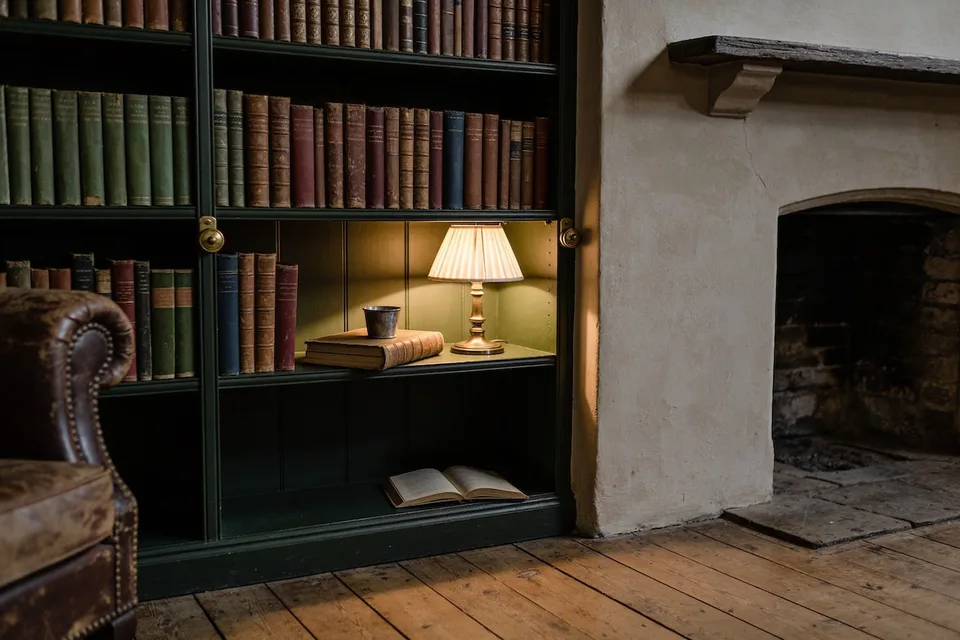
Keep the wool blanket over the back of the chair, where a hand finds it. August nights turn cool quickly, and a room made of glass feels it first. The chair, the lamp and the blanket are the same three things that make a reading nook. In a sunroom they come with a view.
October: when the porch geraniums come in and the room fills up
In October the sunroom fills with plants. The geraniums and the pots that spent the summer outside come in before the first frost and line the windowsill, and for a few weeks the room is more greenhouse than sitting room. Leave a clear path to the chair, and let the rest of the room go green.
Stand the pots on the sill or on a plank along it, with a saucer under each, so the floor stays dry and the table stays free. Put the big ones on the floor in the corners, where they read as furniture rather than clutter. Some of them are only visiting and will go back out in May.
The porch is usually cleared the same weekend. The cottage fall porch is about what stays out there and what the front door needs through the fall.
Winter: the cool room, and the two hours worth sitting in
In winter an unheated sunroom is cool for most of the day and pleasant for a couple of hours around late morning, when the sun is on the glass. Use those hours: sit there with a coffee among the plants. Let the rest of the day be what it is, a cool room that is good for keeping things.
A cool room is useful in December. The extra chairs for Christmas dinner can wait in there, and so can the wrapped presents and the boxes that come up from the basement for the holidays. Keep the chair and the blanket where they are, though, so the room is still somewhere to sit on a bright January morning with snow light coming off the garden.
When the tree comes down, the whole house goes quiet for a few weeks. Cottage winter decor is about what stays out after Christmas, and the sunroom, full of green in the middle of January, is a large part of the answer.
What stays all year, and the one wall that isn't glass
A few things live in a sunroom all year: one good chair, a small table, a rag rug, a lamp and a wool blanket. Furnish it from the rest of the house rather than from a set. Put the lamp, a picture and any shelves on the one wall that isn't glass, and leave the windows mostly bare.
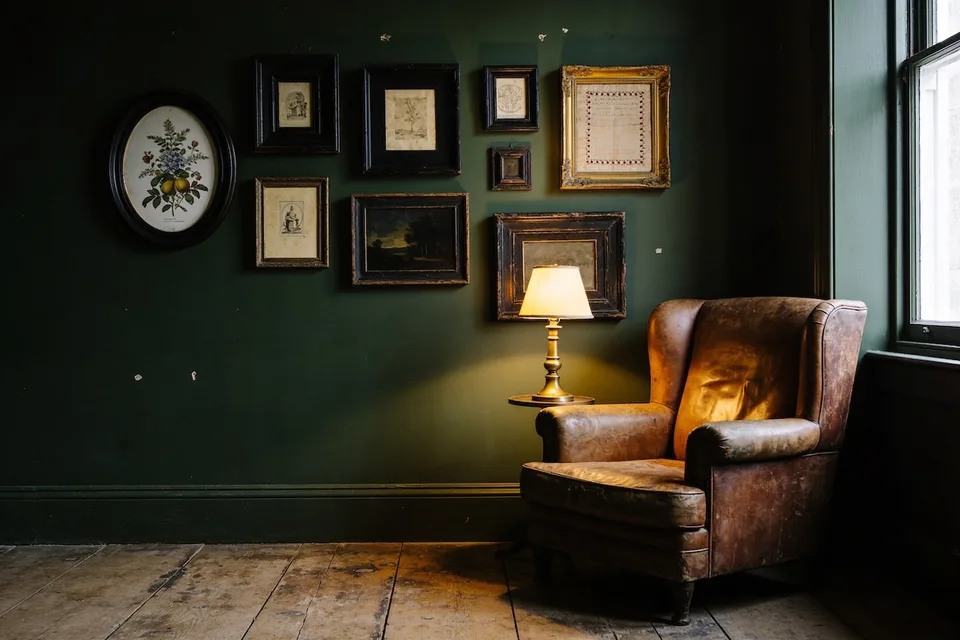
A sunroom has one wall that is a wall. Everything else in the room is seen against the garden by day and against the dark at night, so the solid wall does the work that other rooms spread over four: the picture, the shelf, the hook for a coat, the plug for the lamp. A deep colour on that wall gives the rest of the room something to stand against.
On the floor, a rag rug takes wet boots and a plant's drip and goes in the wash. Painted boards or old tile under it suit a room this close to the weather. At the windows, do very little. Bare glass is the reason the room is there. If the afternoon sun is too much in July, a plain linen blind on that side is enough.
Start with the chair that gets the March sun
This week, sit in the sunroom at the times you would actually use it, morning and evening, and find the corner where the light is best. Put the chair there, a small table beside it and a blanket over the arm. Leave the rest of the room as it is, and see what it asks for next.
Common questions
What is a cottage sunroom?
A small room with glass on two or three sides, usually at the back or side of the house, and often a porch that was glassed in years ago. It is not the same as a Muskoka room, which has screens instead of glass and is closed up for the winter. A sunroom can be used in every month, for a different job in each.
How do you decorate a cottage sunroom?
Furnish it from the rest of the house rather than from a matching set: one good chair, a small table, a wool blanket, a rag rug, a lamp and a row of plants along the sill. Put the lamp, a picture and any shelves on the one wall that isn't glass, and leave the windows mostly bare.
How do you use a sunroom in winter?
Sit in it for the couple of hours when the sun is on the glass, usually late morning, and treat the rest of the day as a cool room. It is a good home for the geraniums brought in from the porch, the extra chairs for Christmas dinner, and the things that come up from the basement for the holidays.