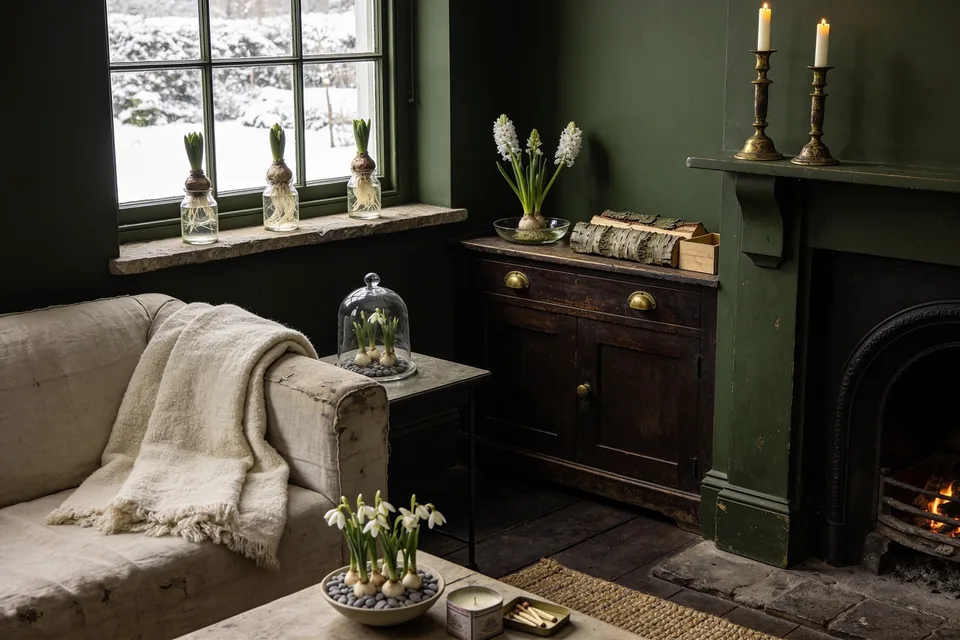
 Cottage at Home
Cozy fall living room decor: turning the room back toward the fire
Cozy fall living room decor by swap and gesture, not purchase — wool over the linen, lamps brought low, the fire laid, and the chairs turned back to the hearth.
In this guide
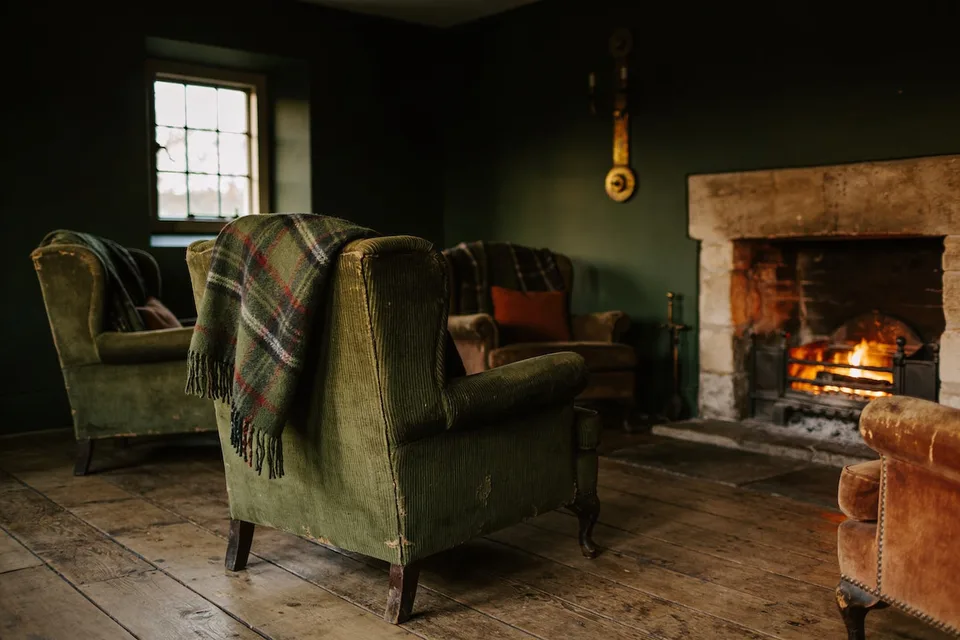
By the last week of September the sitting room loses its light an hour earlier than it did in August, and the loss lands somewhere particular: on the sofa still dressed in summer linen, pale and faintly wrong in the new dusk, like a guest who missed the change in the weather. The grate has been swept and empty since May. The chairs still face the garden window out of a habit formed in June, though the garden now goes dark before supper. The room has noticed the season before anyone sitting in it has.
What the season actually asks
Most of what files in under cozy fall living room decor arrives in boxes — pillow covers in pumpkin shades, a garland for the mantel, a sign with an autumn word painted on it. Cheerful enough, and beside the point, because the turn a sitting room makes in late September is older than any of it and needs none of it. The autumn room is the summer room with three things changed. Wool comes out over the linen. The lamps come down low. The fire is laid, and the hearth takes back the work of holding the room together — work the window has been doing since June. Each of these is a swap or a gesture, made in an afternoon from what the blanket chest and the log basket already hold.
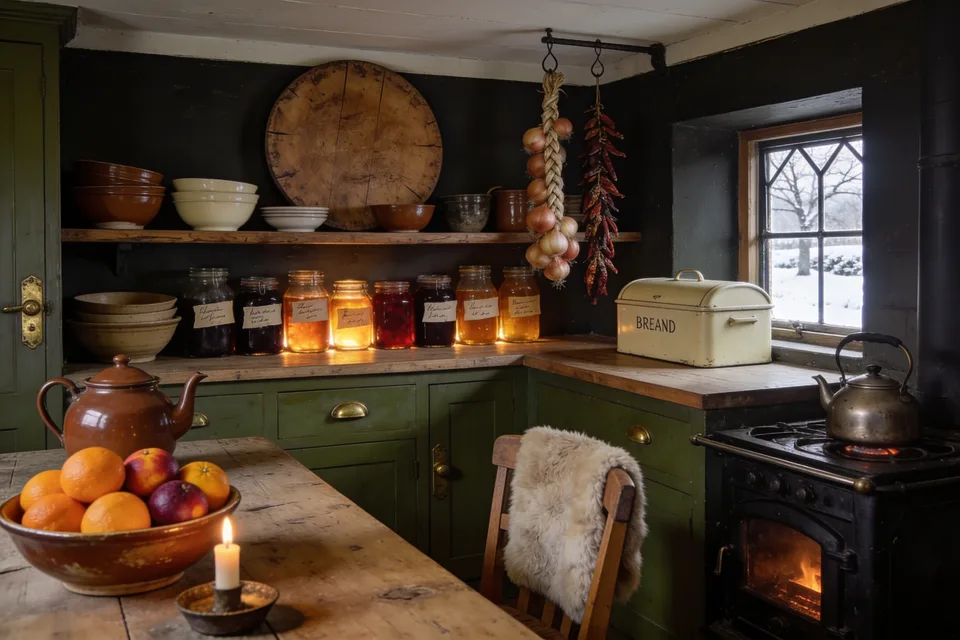
The kitchen usually turns first; it keeps the kettle, and it meets the early dark before any other room does. The sitting room follows at its own pace, and its turn runs lower and slower — less about the smell of the season, more about where the light pools and which way the chairs face.
The chairs turn back toward the fire
All summer the furniture leans toward the garden — chairs angled to the window, the sofa broadside to the view, the hearth reduced to a swept stone alcove the room walks past. Autumn reverses the current. The room's center of gravity moves back to the fireplace, and the furniture should be allowed to follow it: the two chairs angled in toward the grate until they half-face each other, the rug walked a foot closer to the hearthstone, the low table brought inside the new circle so a cup can land within reach of every seat.
The fire does not need to be lit to hold all this together. A fire laid ready — kindling crosshatched over a firelighter, three split logs waiting — changes a room the way a made bed changes a bedroom: it reads as intention, and the hearth becomes a promise instead of a hole. Lay it in the morning and the evening asks only for a match. And in a room with no working fireplace, the hearth can still take the chair back — a cluster of thick candles standing in the cold grate, a small lamp set low on the hearthstone, the mantel kept dark and warm above them. What matters is that the room owns one warm center that is not a screen, and that the seats defer to it.
Wool goes over the linen, not instead of it
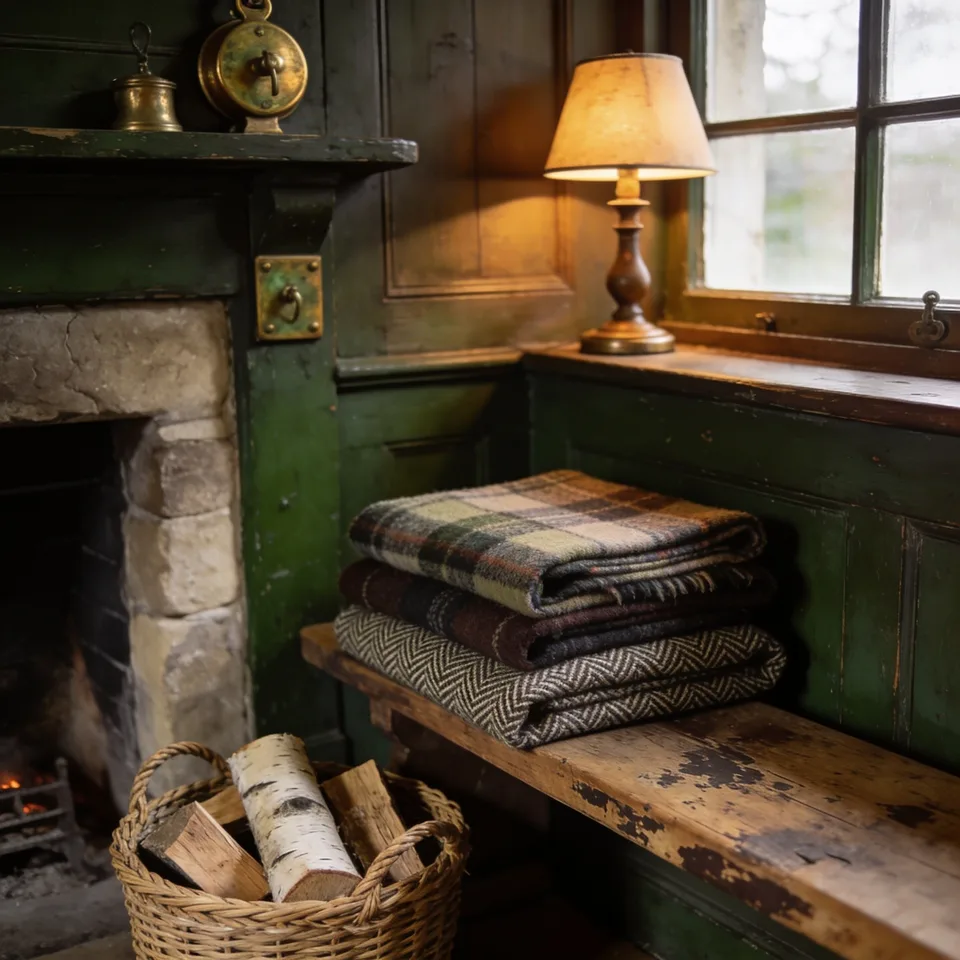
The textile turn is the one everybody makes, and the only mistake commonly made with it is treating it as a changeover. It is a layering. The summer linen stays on the sofa and the wool arrives on top of it: a throw with real weight over the sofa's arm, a second across the back of the reading chair — herringbone, an old plaid gone soft with washing, colors from the dark side of the leaf pile. Cushions turn for autumn by cover alone; the same inserts take their deeper covers — moss, rust, umber — and the pale slips are washed and shelved until spring.
The reasons are practical before they are pretty. Wool warms a lap long before the fire does, on the mild October evenings when lighting it would be more theater than need. And wool holds low light close — lamplight lands on a wool throw and stays there as a glow, where cotton hands it straight back. A heavy throw over a chair arm also keeps the seat looking claimed, which is how the hearth circle keeps its standing on the nights nobody gets to sit down until late.
The lamps come down and the overhead goes off
Summer barely needed the lamps; the evenings lit themselves until nine. An autumn evening is long enough to be worth furnishing, and it is furnished with pools — one lamp at shoulder height beside the reading chair, one low on a side table by the sofa, warm bulbs in both, the overhead left off from dusk on. The middle of the room is allowed to go soft. The edges are allowed to go softer. What is lit is what is lived at: the chair, the page, the hearth.
This is the sitting-room verse of the amber turn the whole house makes as the days shorten, and rooms that keep deep walls the year round are half-turned already — green-black and brown hold a lamp's glow close to its shade, where white walls scatter it thin. But no repainting is required by October. Lamplight against wool and old wood makes its own dark walls after sundown.
Summer gets folded away
A swap runs in both directions, and the autumn things should land in places summer has just vacated, or by late October the room is crowded rather than kept. Halloween is where that rule is tested hardest, since the season's own aisle is built to be added to and a kept room is the one that declines most of it. The light cotton throw is washed and shelved. The jug of dried grasses that stood in the grate all August hands it back to the kindling. The shells and the pale stones come off the mantel so the candlesticks and the darker brass can stand there without jostle. None of this is banishment — it is rotation, the same courtesy the room will pay in April when the wool goes back in the chest and the linen comes up for air. A season looks strongest in a room that is not still wearing the last one underneath. The picture over the mantel can turn with the rest of the room: six harvest studies wait in our own Etsy shop, the orchard apples, the chestnut bowl, the damson plate, printed at home for the frame the summer picture can lend until spring.
Lay the fire and leave it waiting
This evening, make the smallest whole version of the turn. Sweep the grate and lay the fire — crosshatched kindling, three logs — and leave it unlit if the night is mild. Turn the nearest chair to face it, hang the heaviest throw over its arm, switch one lamp on and the overhead off. The room will read as autumn before a match is ever struck, and the first cold evening will find everything already waiting.
Common questions
How do you make a living room cozy for fall without buying anything?
Change three things, all of them already in the house. The autumn room is the summer room with three things changed: wool comes out over the linen, the lamps come down low, and the fire is laid, so the hearth takes back the work of holding the room together. Each is a swap or a gesture, made in an afternoon from what the blanket chest and the log basket already hold — no boxes of pillow covers or painted signs required. Start with the smallest whole version: sweep the grate and lay the fire, turn the nearest chair to face it, hang the heaviest throw over its arm, and switch one lamp on with the overhead off.
Should you rearrange the living room furniture for fall?
Yes — turn it back toward the fire. All summer the furniture leans toward the garden, chairs angled to the window and the hearth reduced to a swept alcove the room walks past, and autumn reverses the current: the room's center of gravity moves back to the fireplace, and the furniture should be allowed to follow it. Angle the two chairs in toward the grate until they half-face each other, walk the rug a foot closer to the hearthstone, and bring the low table inside the new circle so a cup can land within reach of every seat. The fire does not even need to be lit to hold it together — laid ready, it reads as intention, and the hearth becomes a promise instead of a hole.
How do you make a living room feel warm without a fireplace?
Give the room one warm center that is not a screen. A hearth with no working fire can still take the chairs back: a cluster of thick candles standing in the cold grate, a small lamp set low on the hearthstone, the mantel kept dark and warm above them — what matters is that the seats defer to that one warm point. Then let the rest of the turn do its part: a throw with real weight over the chair arm, warm bulbs in two lamps with the overhead left off from dusk on, the middle of the room allowed to go soft. Wool holds low light close, so lamplight lands on a throw and stays there as a glow, where cotton hands it straight back.